
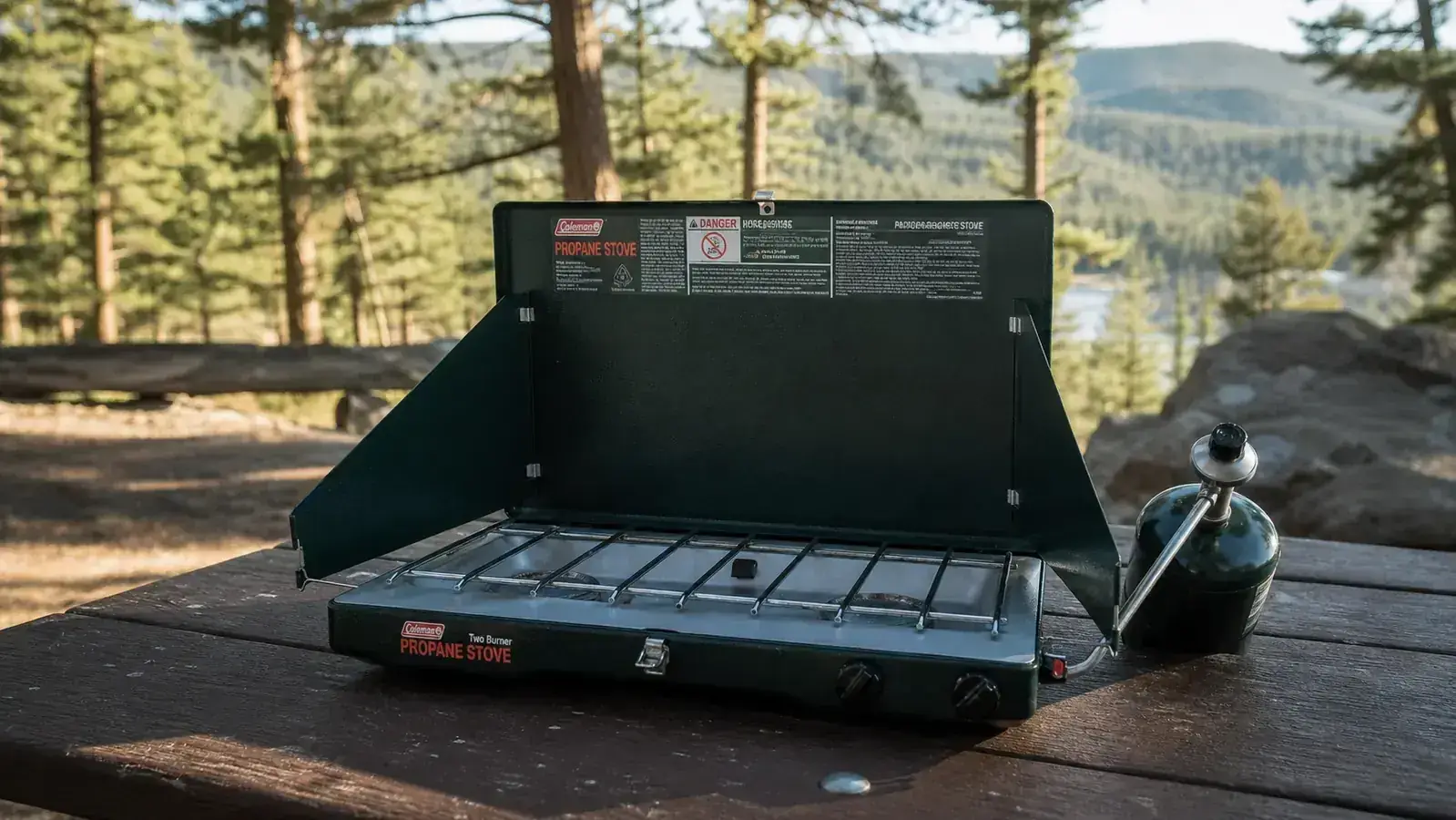
A 4.7-star average from 3,584 buyers is not a number you ignore. When a camp stove racks up that kind of consensus, it is telling you something real. I bought the Coleman Triton partly because of that rating, and I want to confirm upfront: the rating is earned. This is a genuinely good stove for most car campers. But I have been camping in Colorado and Wyoming for twelve years, and I run gear through conditions that burn off the optimism pretty fast. There are four things about the Triton that the Amazon reviews will not tell you because most buyers never run into them. You need to know all four before you hand over your money.
I am not here to trash the stove. I still own mine and I still load it in the truck. I am here because I asked a buddy named Phil last spring whether he should buy the Triton and I spent thirty minutes on the phone going through specifics that are not in any review I can find online. This article is that conversation written down.
The Quick Verdict
The Coleman Triton earns its 4.7-star average for most campers, but its wind sensitivity, cold-weather propane behavior, and grate maintenance reality are real tradeoffs that the review count glosses over. Know what you are buying into.
Amazon Check Today's Price →Stop cooking one pan at a time. Two burners changes the whole camp kitchen game.
The Coleman Triton 2-Burner Propane Stove has 3,584 Amazon ratings averaging 4.7 stars. Check the current price before your next trip.
Amazon Check Today's Price on Amazon →How I Tested It (The Context That Matters)
I test gear in conditions that matter to me personally: car camping and truck camping at developed sites in Colorado and southern Wyoming, usually between 7,500 and 11,000 feet elevation, in groups of three to six people. My testing is not a controlled lab. It is cooking breakfast on a windy August morning at a dispersed site near Steamboat Springs when the temperature is 52 degrees and I have six people waiting on eggs. That is where stoves either perform or they do not.
I have run the Triton off both 1-pound green canisters and a bulk 11-pound tank connected via a hose adapter. I have used it in calm air and in headache-inducing Wyoming wind. I have stored it for months, cooked greasy meals on it, and cleaned it improperly once and paid for it. I will get into all of that.
The things I specifically looked for in this review: how the stove behaves when things go wrong, not just when everything is ideal. Most reviews describe ideal conditions. This one does not.
What the Star Rating Gets Right
Let's start with the honest good news, because there is plenty of it. The Triton's push-and-turn ignition is reliable in a way that most camp stove igniters are not. I have started this stove cold at 38 degrees at 9,000 feet when the canister felt cold to the touch. It lit on the first turn. Not the second try, not after warming the canister in my hands for five minutes. First turn. Coleman's igniter spec on the Triton is a genuine improvement over their older Classic design, and you will notice it every single morning you cook at camp.
The 10,000 BTU per burner output is enough for real cooking. I have brought a 5-quart pot of water to a rolling boil in under eight minutes at 8,500 feet. I have seared elk steaks in a 12-inch cast iron skillet on the bigger burner while keeping a pot of garlic butter warm on the smaller one at the same time. The stove handles that load without complaint. The grates are spaced right for a Dutch oven, they do not flex, and the burner heat is even enough that you do not get a hot ring in the center and cool spots at the edge.
The setup takes about ten seconds if you are running a 1-pound canister. Open the lid, fold up the back panel, thread the canister in, push and turn. That's it. For a group camping situation where you want camp running as fast as possible after pulling in, that matters more than you might think. The stove does not fight you at either end of the day.
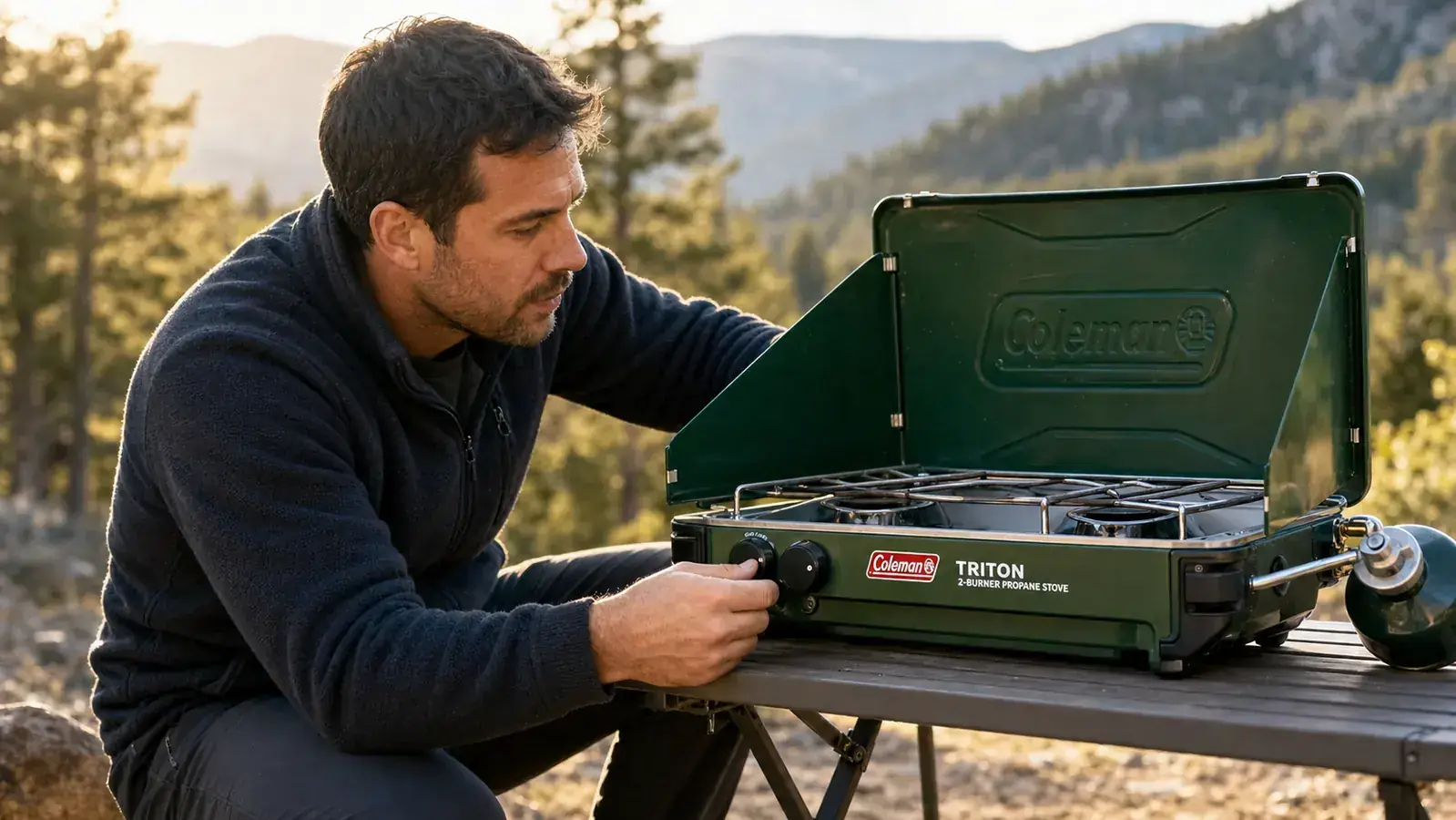
What Nobody Tells You: The Four Real Tradeoffs
Here is the part that took me a few trips to fully understand. None of these are dealbreakers for most campers, but two of them might be dealbreakers for you specifically depending on where and how you camp.
1. The Wind Panels Are Decorative at High Wind
The Triton has fold-out side panels that Coleman markets as windscreens. They help with light breezes. In sustained wind above about 12 miles per hour, they are not blocking enough airflow to matter. The design has open front and rear, so any wind coming from an angle simply wraps around. On a calm campsite below 8,000 feet, you will never know this. On an exposed Wyoming site in July with afternoon gusts, your boil time doubles and your cast iron takes forever to come up to temperature. I watched my buddy Keith try to cook pancakes at a windy pullout near Vedauwoo and eventually give up and switch to his backpacking canister stove, which at least has a pot-fitted windscreen. The Triton stove is excellent. The wind panels are not.
2. Cold-Weather Propane Behavior Catches People Off Guard
Propane's vapor pressure drops sharply when the canister gets cold. Below about 40 degrees, a 1-pound canister that is partly full will start feeding the stove unevenly. The flame will pulse. On a morning where the overnight low was 28 degrees and the canister sat outside the tent, your breakfast is going to be frustrating. The fix is simple: bring the canister in your sleeping bag the night before, or run off a larger tank connected via hose because the bigger tank retains warmth longer. But this is not spelled out in the product listing and most reviewers who camp in summer at low elevation never hit this condition. If you camp in Colorado in September or October, you will.
3. The Grates Are Harder to Clean Than They Look
The porcelain-coated cast iron grates look great in the product photos and they perform great when new. After a few trips of bacon grease and cast iron seasoning buildup, they get sticky in the corners where the porcelain meets the raw metal edge. I soaked mine with a wire brush once without thinking, and the porcelain chipped along the edge. The chip is cosmetic and does not affect cooking, but I would have preferred a heads-up. The right cleaning method is warm soapy water and a soft brush. Do not use abrasives on porcelain. This is basic cookware maintenance knowledge but it is not obvious if you have never owned porcelain cast iron before. More than a few one-star reviews are from people who damaged their grates doing what I did.
4. The Regulator Connection Requires a Specific Technique
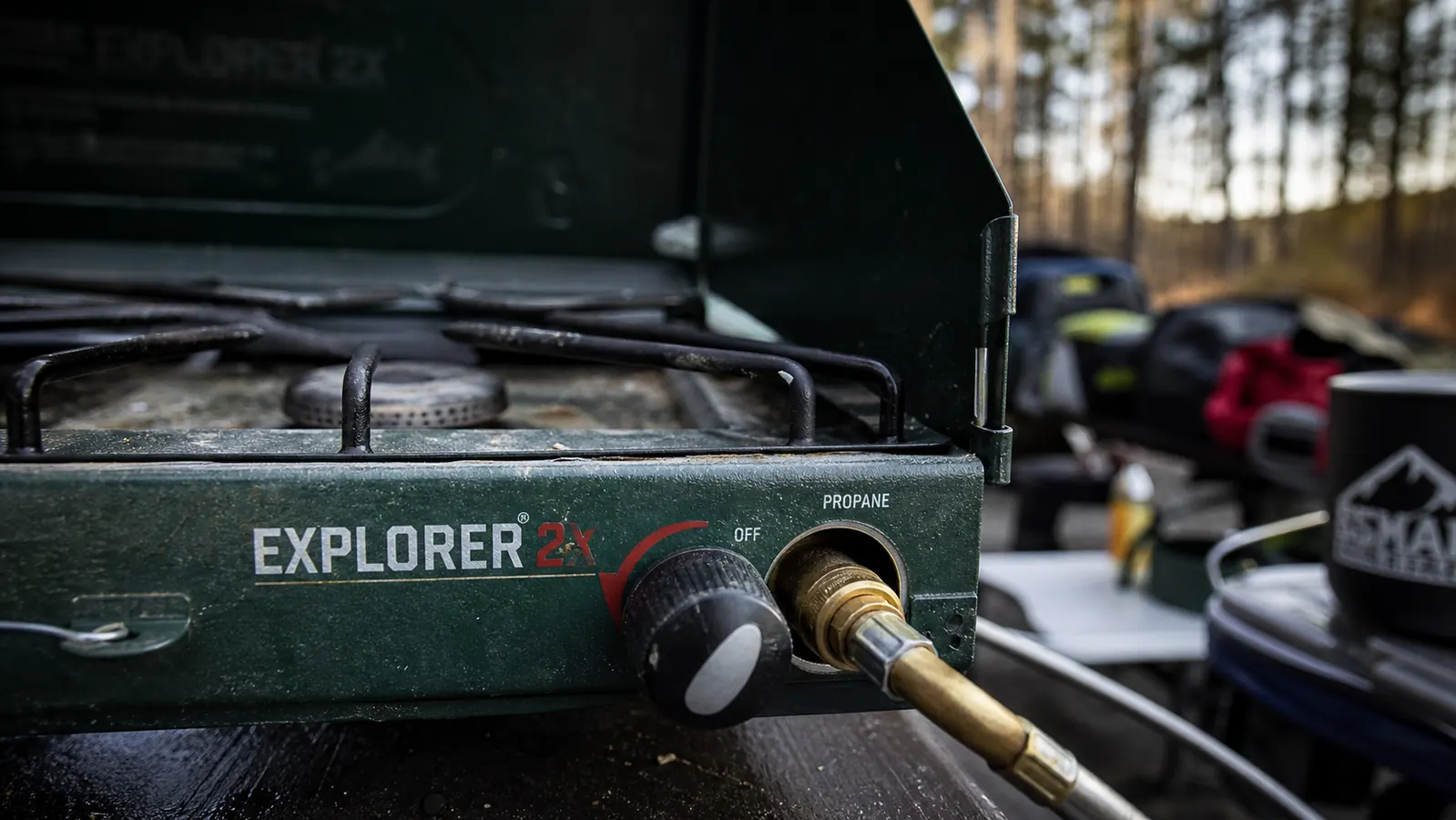
The Triton uses a threaded CGA600 connection for the 1-pound canisters. If you do not thread the canister in completely straight and fully seated before you turn it, you get a hiss and no flame. First-time users sometimes panic and assume the stove is defective. It is not. The connection just requires deliberate threading, not speed threading. Once you know this, it becomes instinct. The first time it happens at 6:30 AM when you are cold and hungry, it is genuinely baffling. I mention this because it accounts for a chunk of the negative reviews and it is entirely avoidable.
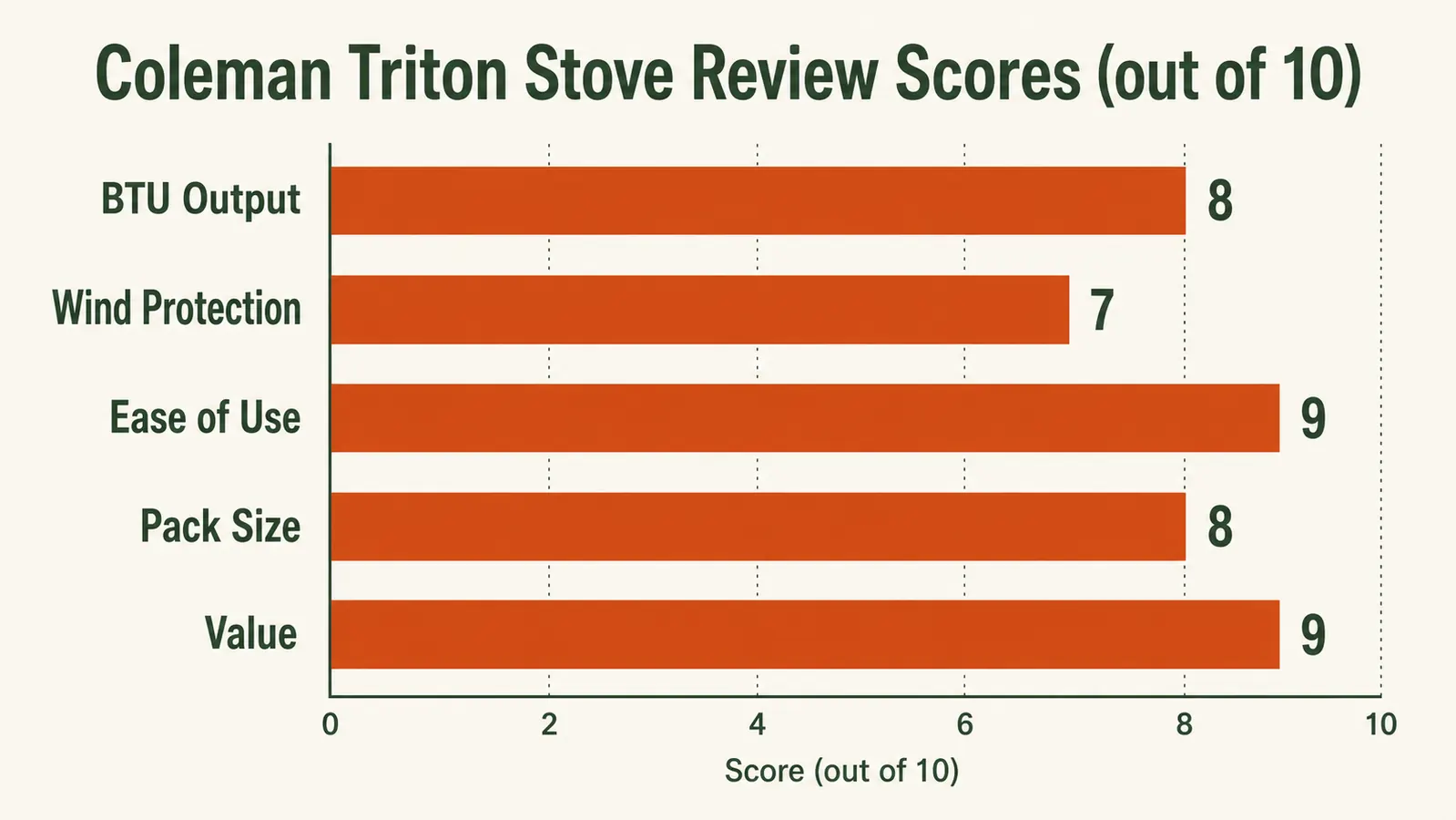
The Coleman Triton is a 4.7-star stove. The people who leave 2-star reviews almost always hit one of four specific conditions that the product page does not prepare them for. Know the four and the stove makes complete sense.
Real-World Cooking Performance Beyond the Specs
The spec sheet says 10,000 BTU per burner. What that means in practice: at 8,000 feet in calm air, I can bring 2 quarts of water to a full boil in about six minutes on the larger burner. Eggs set in a buttered pan in under three minutes at a medium-low flame. The flame control knobs have enough range that you can actually simmer without the flame dying, which is something that sounds like a minimum feature but that budget camp stoves routinely fail at. The Triton's simmer capability is real.
One detail I want to give you: the two burners are not the same size. The left burner is slightly larger, which means it pulls slightly more gas and runs hotter all else being equal. Put your heaviest, highest-heat cookware on the left burner. Run your sauce pot or the smaller item on the right. Once you internalize this, your camp cooking rhythm gets noticeably smoother. Nobody tells you which burner is dominant in the product listing.
I have used this stove for everything from a simple camp breakfast to a full campsite dinner for six people with three pots running in sequence. The Triton handles that rotation without issue. The stove body is stable on a level picnic table. The legs do not wobble. A fully loaded 12-inch cast iron skillet sits without any flex in the grates. These are the fundamentals that make a stove actually usable rather than just technically functional.
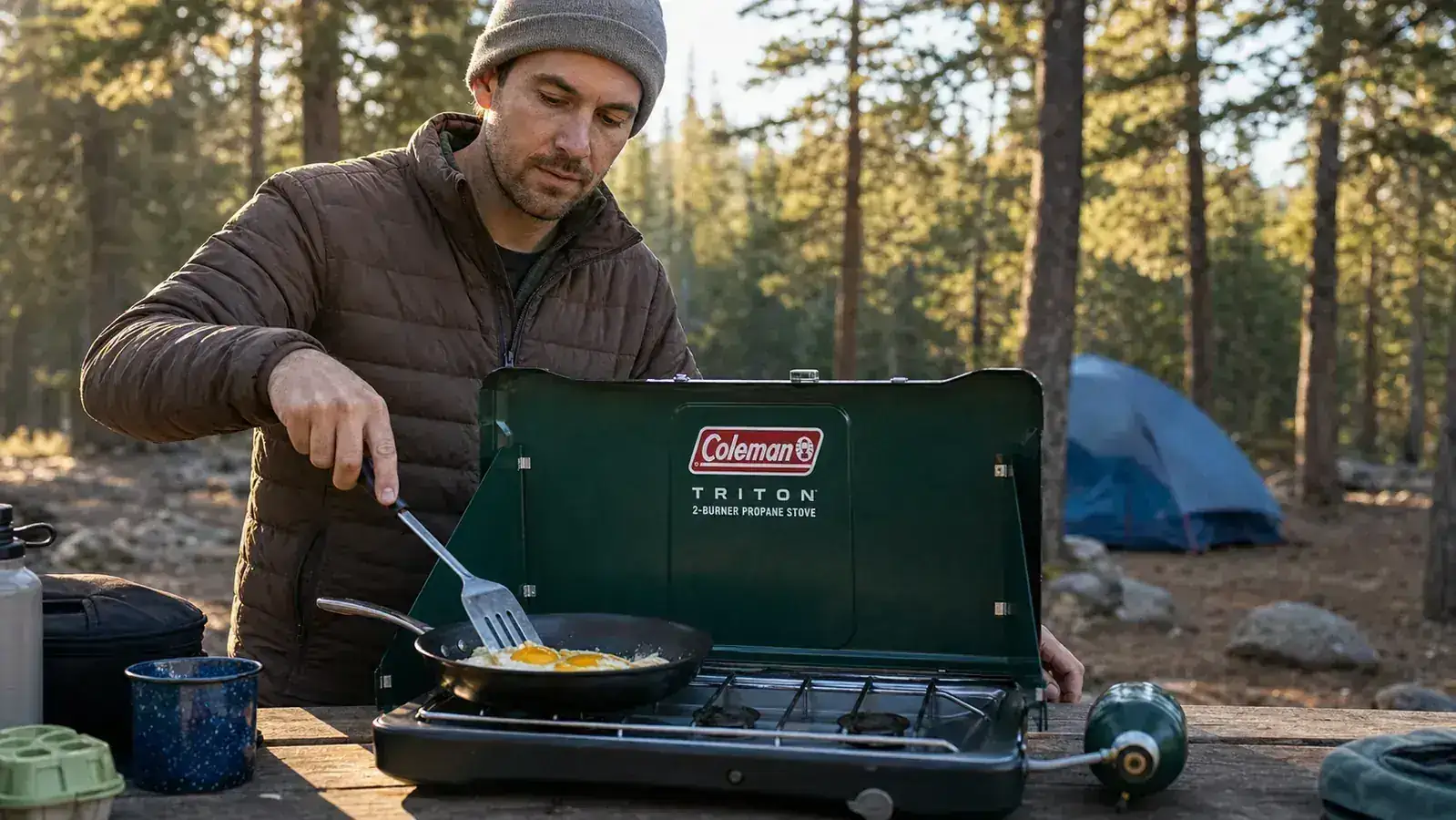
The Honest Comparison: Where the Triton Sits in the Market
The two stoves that come up most as alternatives are the Camp Chef Everest 2X and the older Coleman Classic. The Camp Chef runs 20,000 BTU per burner with a matchless ignition and a design that handles wind substantially better because of how the burner heads are recessed. It also costs roughly double the Triton's current price. If you regularly camp in exposed, high-wind conditions in the Rockies or the Great Basin, that price difference is worth paying. The wind performance gap is real and the Triton's side panels do not close it.
The older Coleman Classic 2-burner is cheaper and works fine, but the igniter design is older and the flame control is coarser. If you are buying new today, the Triton is the better purchase between those two options for most people.
For a detailed head-to-head between the Triton and the Camp Chef, see my comparison at Coleman Triton vs Camp Chef Stove. And if you want the full practical cooking guide for using any two-burner propane stove at camp, read How to Cook Real Meals Camping with a Propane Camp Stove.
What I Liked
- Push-and-turn ignition lights reliably in cold conditions when the canister is properly threaded and warmed
- Genuine simmer capability on both burners without the flame dying, which budget camp stoves often cannot manage
- 10,000 BTU per burner is enough for cast iron, Dutch ovens, and simultaneous multi-pot cooking
- Stable grate spacing handles large cookware without flex or tipping
- Fast setup and teardown, no tools required, folds flat for truck storage
- Compatible with 1-pound canisters and larger tanks via hose adapter for extended trips
Where It Falls Short
- Side wind panels do not close off front and rear, so sustained crosswind above 12 mph cuts output significantly
- Cold propane canisters below 40 degrees will deliver uneven flame, causing frustrating pulsing without the large-tank workaround
- Porcelain grate coating chips with abrasive cleaning, and the cleaning instructions do not make this clear
- Regulator threading requires a deliberate seated connection, which confuses first-time users and accounts for several avoidable negative reviews
- Carry bag sold separately at a stove price point that arguably should include it
Who This Is For
The Triton is the right stove for the car camper or truck camper who cooks real food at developed or semi-developed sites, camps mostly below 10,500 feet, and does not regularly deal with relentless crosswind. That covers probably 80 percent of weekend campers in this country. If that is you, the Triton will serve you well for years. The ignition is reliable, the heat output is adequate, and the packaged footprint is manageable. Families cooking breakfast and dinner at a Colorado State Park or a National Forest campground with tree cover will be happy with this stove.
Who Should Skip It
Skip the Triton if you regularly camp above treeline or at exposed, high-plains sites where afternoon wind is a given. The wind panel design is not built for those conditions and you will fight it every exposed trip. In that case, pay the extra money for the Camp Chef Everest. Also skip it if you are backpacking or hike-in camping. The Triton weighs 4.6 pounds before fuel, which makes it strictly a vehicle-based stove. And if you camp frequently in late-season Colorado cold, invest in a hose and a bulk tank from the start rather than running 1-pound canisters in near-freezing temperatures. The stove handles those conditions fine; the small canisters do not.
Know what you are buying and the Triton rarely disappoints. That is a rarer thing than a 4.7 rating suggests.
The Coleman Triton 2-Burner Propane Stove carries 3,584 ratings and a 4.7-star average on Amazon. Most buyers are right to love it. Check today's price and see if it fits your camping setup.
Amazon Check Today's Price on Amazon →