
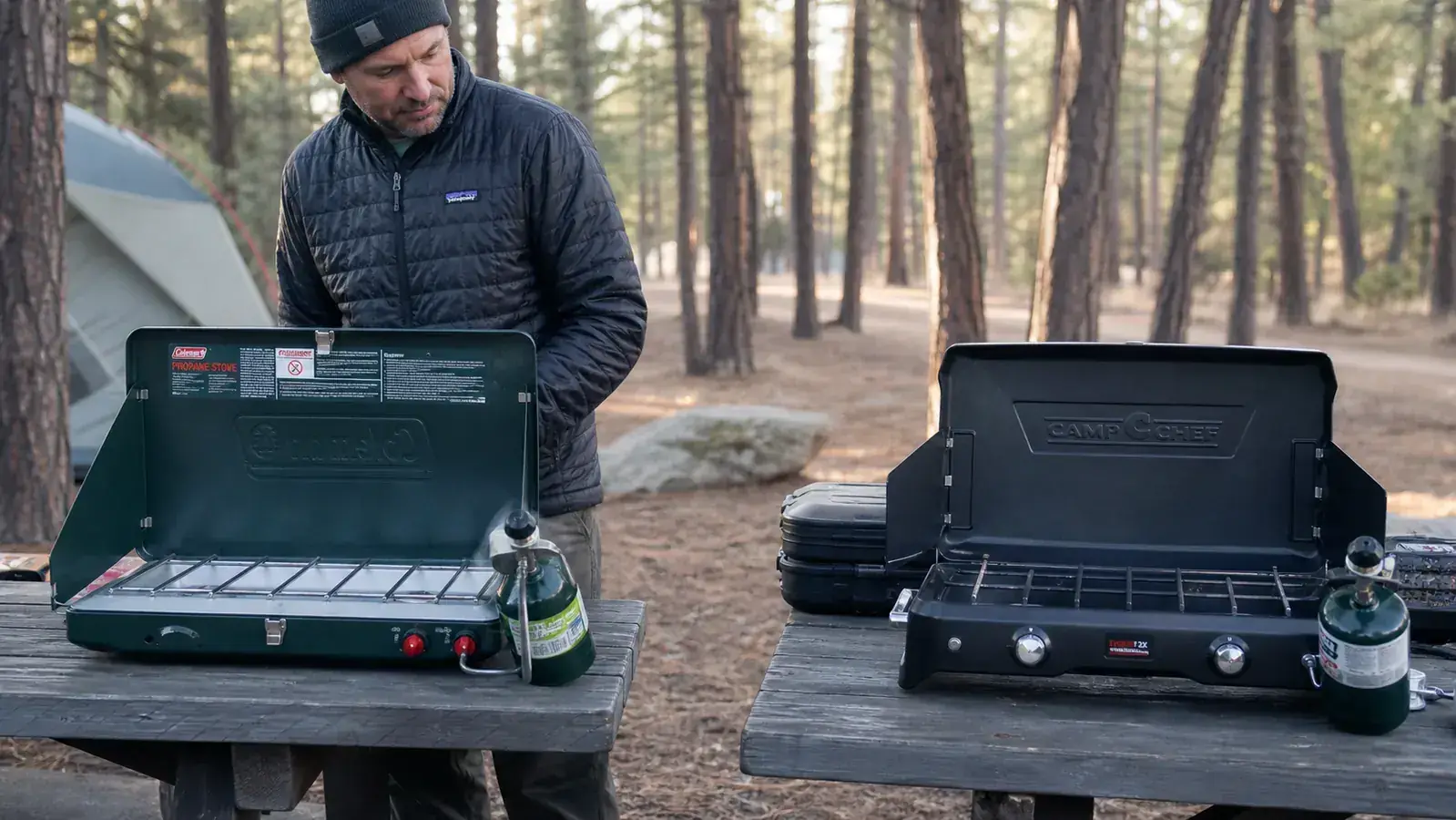
If you are choosing between the Coleman Triton 2-Burner Propane Stove and the Camp Chef two-burner stove, here is the short answer: the Coleman Triton wins for most weekend campers and family car campers. It costs less, packs smaller, and delivers consistent heat on both burners without the fuss of assembling a separate stand or swapping out proprietary hardware. Camp Chef makes a respectable stove for camp kitchens where counter space and max BTUs matter most, but for the typical campsite setup, the Triton is the smarter buy.
I have cooked on both of these stoves at Colorado campsites, from the lower-elevation sites at Eleven Mile State Park to windier spots up near Leadville. What follows is a side-by-side breakdown of everything that actually matters when you are trying to get breakfast on the table before the kids start complaining.
| Spec | Coleman Triton 2-Burner | Camp Chef Two-Burner |
|---|---|---|
| Price (current) | Mid-range | Check today's price on Amazon |
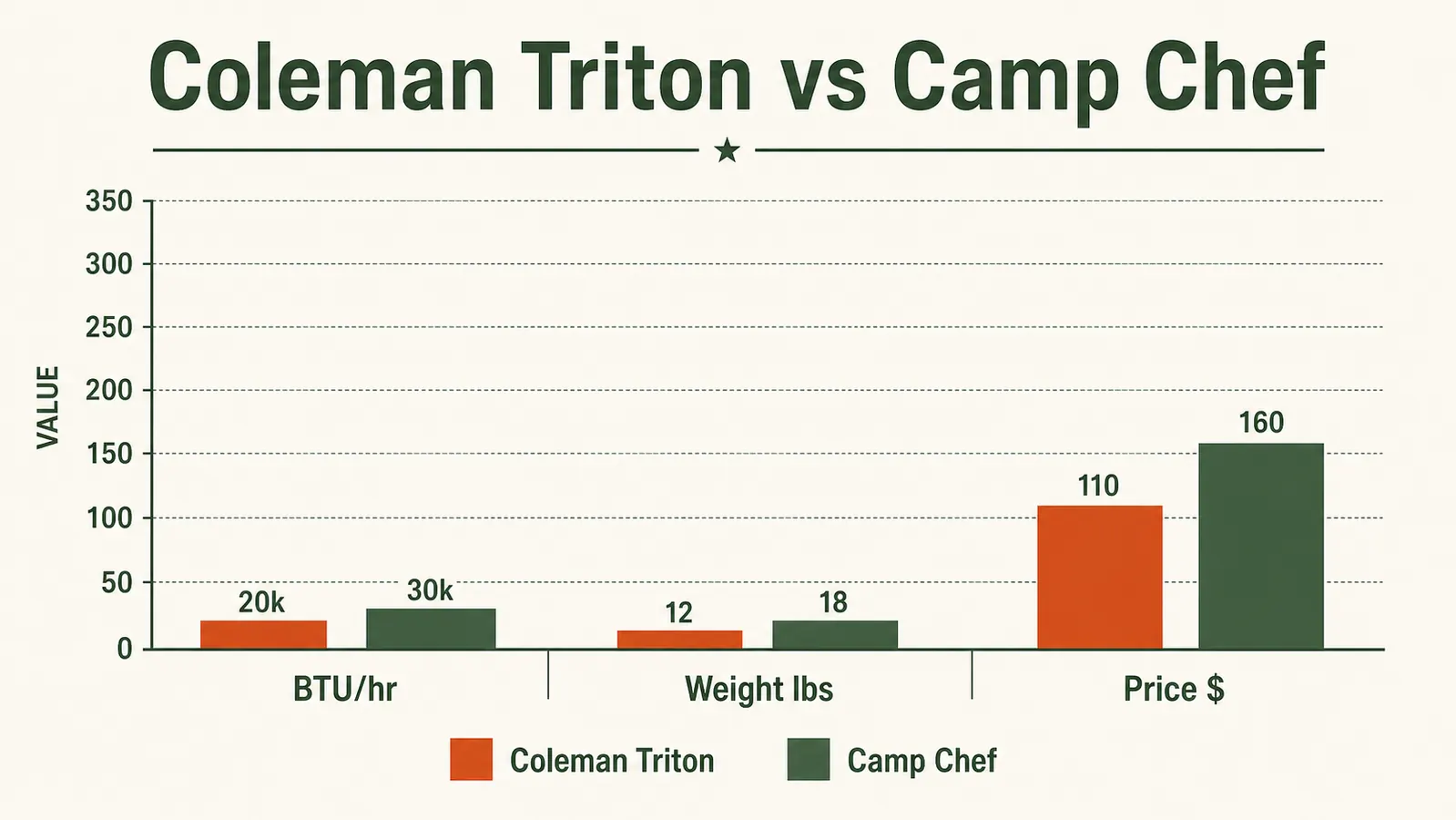
| Total BTU output | 22,000 BTU (2 x 11,000) | 30,000 BTU (2 x 15,000) |
| Weight | 8.4 lbs | 11.5 lbs |
| Packed dimensions (L x W x H) | 23.5 x 13.5 x 4 in | 26 x 14.5 x 5 in |
| Cooking surface area | 2 x 7.5 in round burners | 2 x 9 in round burners |
| Integrated wind protection | Yes, folding side panels | Partial, side walls only |
| Requires separate stand | No, sits on any flat surface | Yes, stand sold separately |
| Ignition type | Push-button piezo | Push-button piezo |
| Amazon rating (reviews) | 4.7 stars (3,584 reviews) | 4.6 stars (~1,200 reviews) |
Where the Coleman Triton Wins
The Triton's folding wind panels are the first thing I noticed in the field. On a breezy morning at Eleven Mile, where the wind comes off the reservoir and kills an unprotected flame in about 30 seconds, the Triton's side panels kept both burners burning clean. The Camp Chef stove has low sidewalls but no fold-out wind protection, so you end up rotating the whole unit or improvising a windscreen. That is fine if you planned for it. Most campers do not.
The price difference is also hard to ignore. The Triton typically runs in the budget range on Amazon at current pricing. Camp Chef's comparable two-burner stove lands in the premium tier depending on the model and when you are shopping. That gap buys you a decent camp chair, a box of propane canisters, or enough ground beef for three campsite dinners. The Triton's 22,000 total BTUs are plenty for eggs, bacon, a pot of oatmeal, and reheating coffee all at the same time. I have never once looked at my Triton at camp and thought 'I wish this thing put out more heat.' Eight pounds is also a real-world advantage when you are loading and unloading the truck four times a summer.
Stop cooking one pan at a time. The Coleman Triton handles two things at once for a reasonable price.
4.7 stars from 3,584 campers. Push-button ignition, folding wind panels, and a cooking surface wide enough for a 12-inch cast iron. Check today's price before your next trip.
Amazon Check Today's Price on Amazon →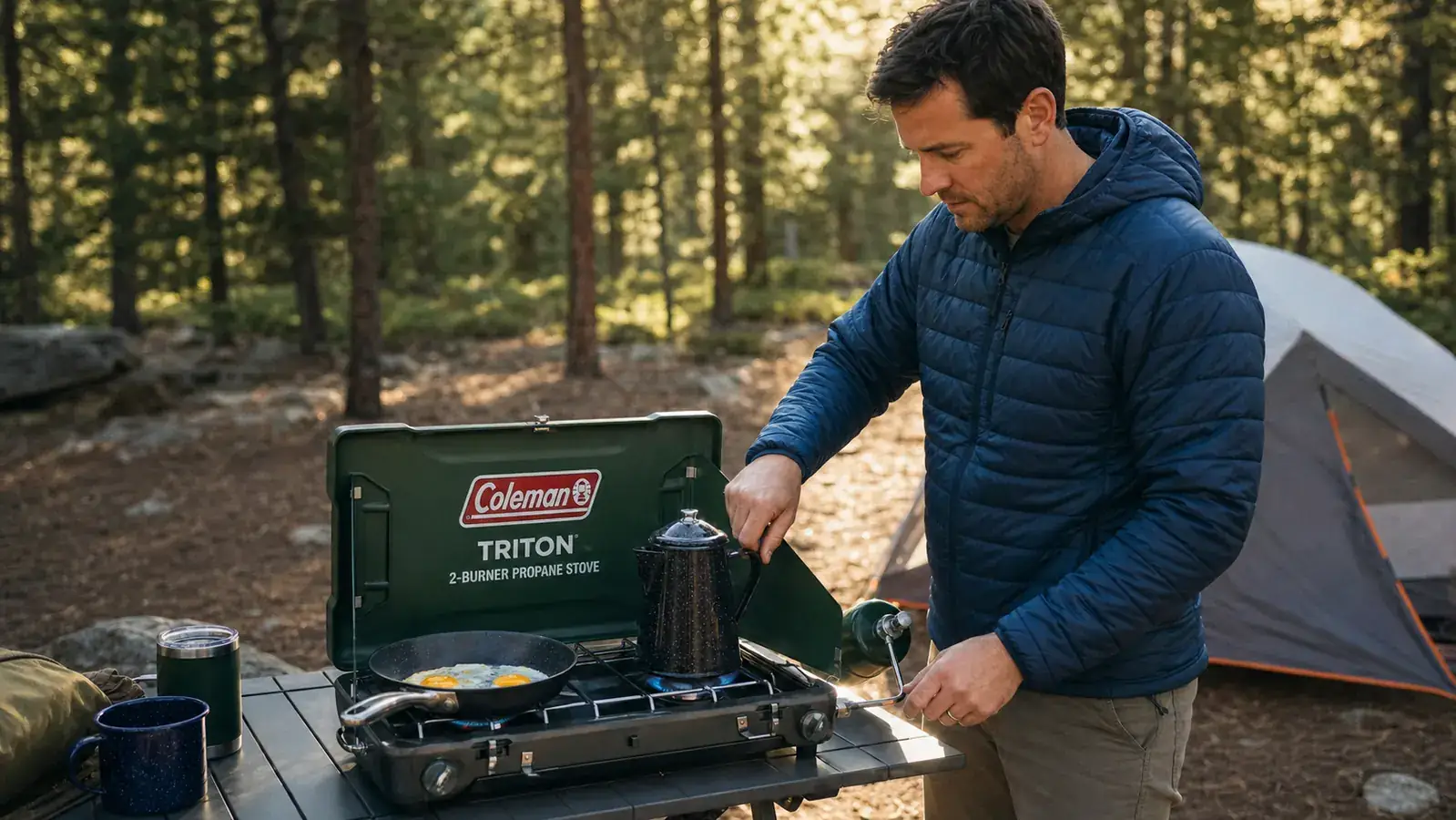
Where Camp Chef Wins
If you run a serious camp kitchen where you are cooking for ten or more people, or if you regularly use a cast iron Dutch oven that needs sustained high heat, Camp Chef's extra BTUs matter. Their 15,000-BTU-per-burner output is noticeably hotter than the Triton's 11,000 per burner when you are trying to boil a full pot of water in under five minutes, or when you want to sear meat properly instead of just browning it. Camp Chef also has a larger cooking grate per burner, which matters if you run two 12-inch skillets simultaneously and do not want them overlapping.
Camp Chef's accessory ecosystem is another real advantage, but it is a double-edged thing. If you plan to add a griddle attachment, a wok ring, or a BBQ box down the road, Camp Chef builds that compatibility in. The Triton is a stove. That is what it does. It does not accept add-ons, and Coleman has not built an accessory system around it. For the camper who wants a modular outdoor cooking setup, Camp Chef is the platform to invest in. For the camper who just wants to cook breakfast and heat up dinner, the Triton covers the job at a lower price with less to carry.
The Camp Chef puts out more heat. The Triton puts out enough heat, costs less, and fits in a smaller footprint. For most campers, enough is actually enough.
BTU Numbers: What They Actually Mean at a Campsite
Both stoves use standard 1-pound propane cylinders or connect to a 20-pound tank with an adapter hose. The Triton's 11,000 BTU per burner will bring two quarts of water to a rolling boil in about seven minutes on a calm morning. Camp Chef's 15,000 BTU shaves that to around five minutes. That difference is real but rarely meaningful unless you are cooking for a large group with back-to-back pots. For eggs, bacon, and pancakes for a family of four or five, both stoves feel essentially the same. Where you feel the Camp Chef's extra BTU ceiling is when the ambient temperature drops below 45 degrees, propane pressure falls, and a lower-output burner starts to struggle on high. That said, most weekend campers in reasonable temperatures will not hit that edge.
One thing BTU numbers do not tell you is flame distribution. The Triton's round burners spread heat evenly across a standard skillet without hot spots in the center. I have cooked pancakes on it without burning the middle before the edges set, which is the real-world test. It passed.
Packability and Setup Time
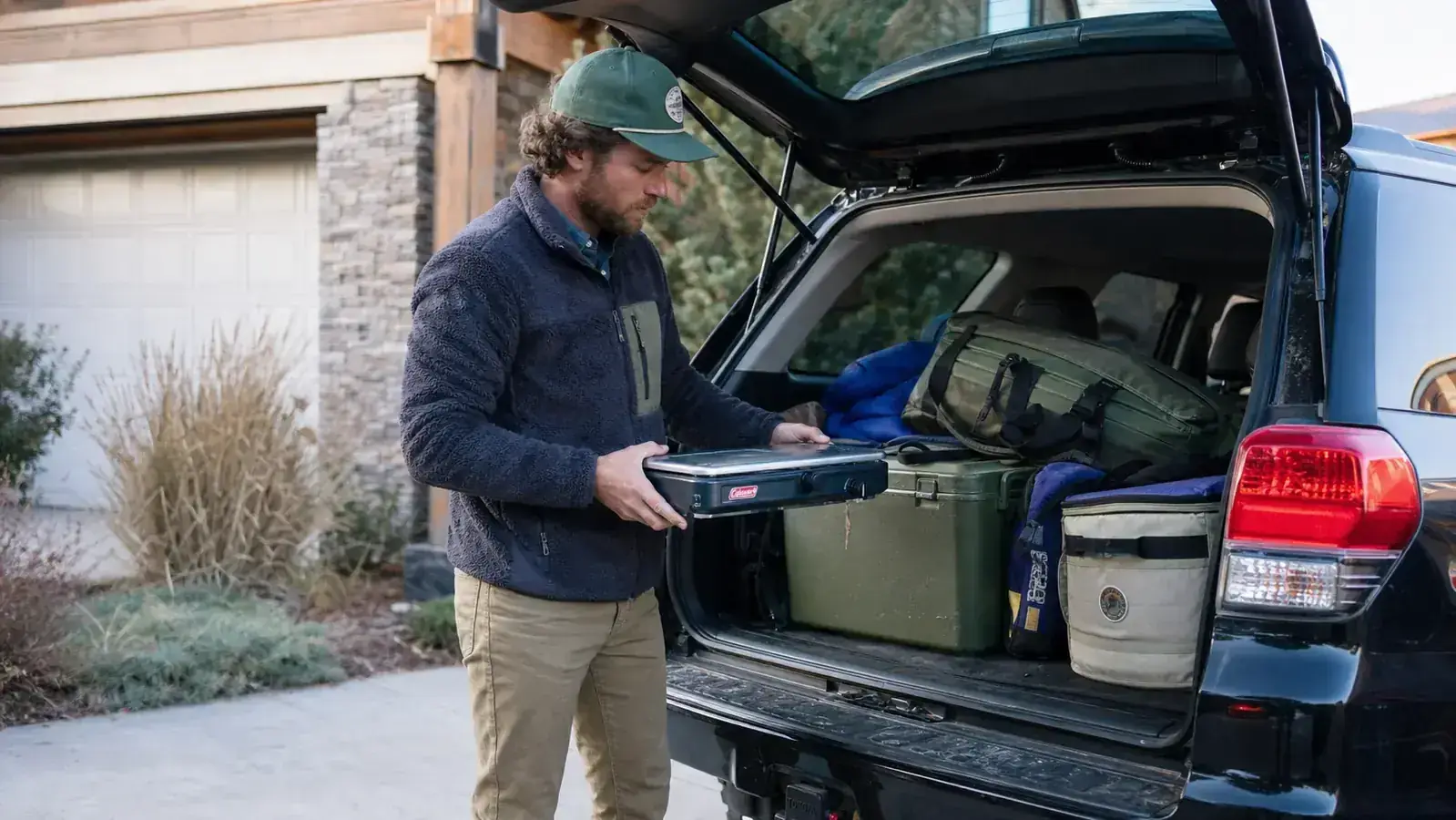
The Triton folds flat and latches shut. It goes in the truck, on a table, on a tailgate, or on a folding camp table without any additional setup. Open it, attach propane, push the ignition, done. Total time from truck to cooking is under two minutes. Camp Chef's base stove also sets up quickly, but if you bought the stand-and-stove combo (which is how most people buy it), you are assembling legs each time you set up camp. That is maybe an extra three to four minutes, but it is a consideration if you are moving between sites on a multi-day trip.
At 8.4 pounds, the Triton is meaningfully lighter than Camp Chef's 11.5 pounds before you add the stand weight. On a car camping trip the weight difference rarely kills you, but the packed dimensions do matter when you are fitting gear around coolers, sleeping bags, and a tent in the back of a mid-size SUV. The Triton's profile is simply more manageable.
Durability: What Holds Up and What Wears Out
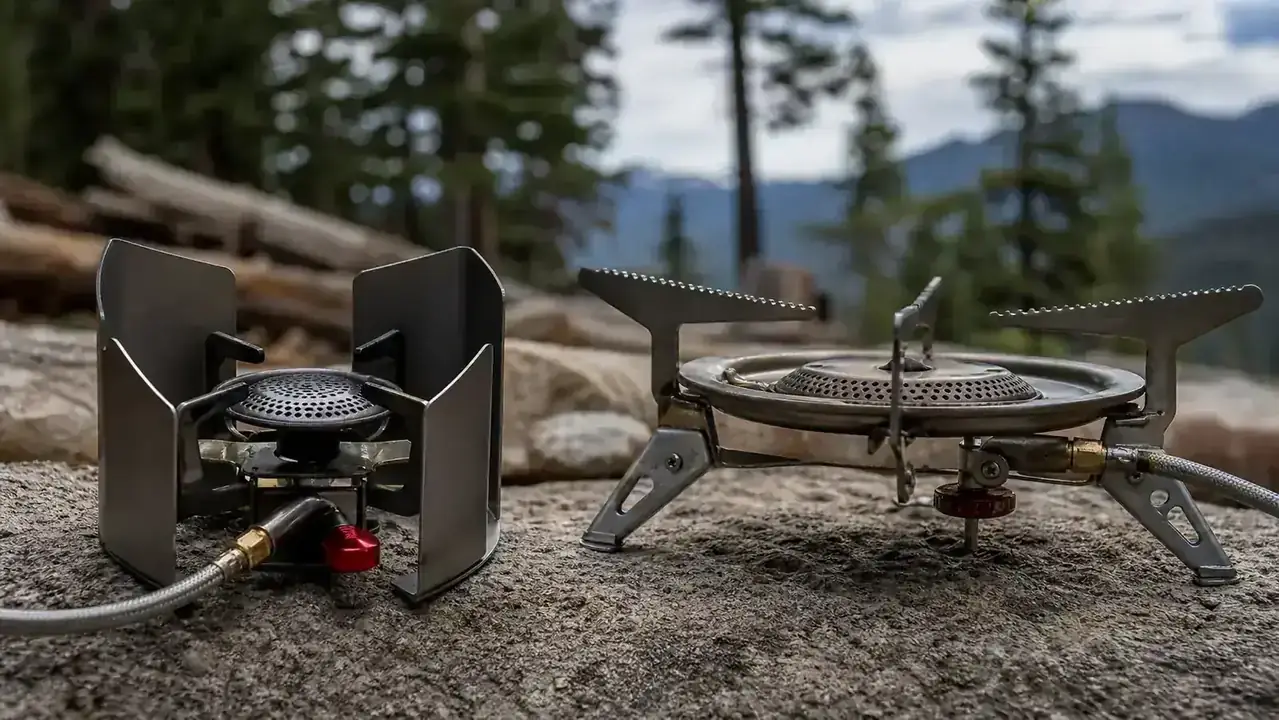
The Triton's legs are the one spot I keep an eye on. After a couple of seasons of folding and unfolding, the hinge hardware on the legs can loosen. It is not a deal-breaker and it is fixable with a screwdriver, but it is a real thing that happens. The cooking grates on both stoves hold up fine with regular cleaning. The Triton's piezo ignition has worked reliably for me across three Colorado summers, which I cannot say about every camp stove igniter I have used. If it ever stops working you can light it with a regular match, but that has not been necessary yet.
Camp Chef stoves are built with slightly heavier gauge steel, which contributes to the weight but also means the body flexes less over time. If you cook aggressively, use heavy cast iron regularly, or plan to keep a stove for a decade, Camp Chef's construction may age better. The Triton is a solid stove for years of regular use, but it is not built like a restaurant range. It is built like a well-made camp stove.
Who Should Buy the Coleman Triton
Buy the Coleman Triton if you camp with a family or a small group two to ten weekends a year, you cook standard campsite meals like eggs, pasta, hot dogs, and breakfast burritos, you want a stove that sets up fast and does not require a separate stand, and your budget is limited. It is also the right pick if you camp in areas with occasional wind and want folding side panels to protect the flame without a separate windscreen purchase. It holds 4.7 stars across 3,584 Amazon reviews for a reason. People use it, love it, and come back to recommend it.
Who Should Look at Camp Chef Instead
Camp Chef earns its higher price if you cook for groups of eight or more regularly, you want a modular setup where you can add a griddle, wok, or BBQ attachment later, or your cooking style involves high-heat techniques that push the limits of 11,000 BTU burners. It is also worth the extra money if you are setting up a semi-permanent basecamp where the stand stays assembled for days at a time, removing the setup-and-teardown disadvantage entirely. If none of those situations describe your camping, the extra cost is money you could spend on food, fuel, or something else you actually need at camp.
The Coleman Triton has better reviews, a lower price, and built-in wind protection. It is the easier choice for most campers.
Rated 4.7 stars by over 3,500 campers. Push-button ignition, folding side wind panels, 22,000 total BTUs. Grab today's price on Amazon before your next trip.
Amazon Check Today's Price on Amazon →