
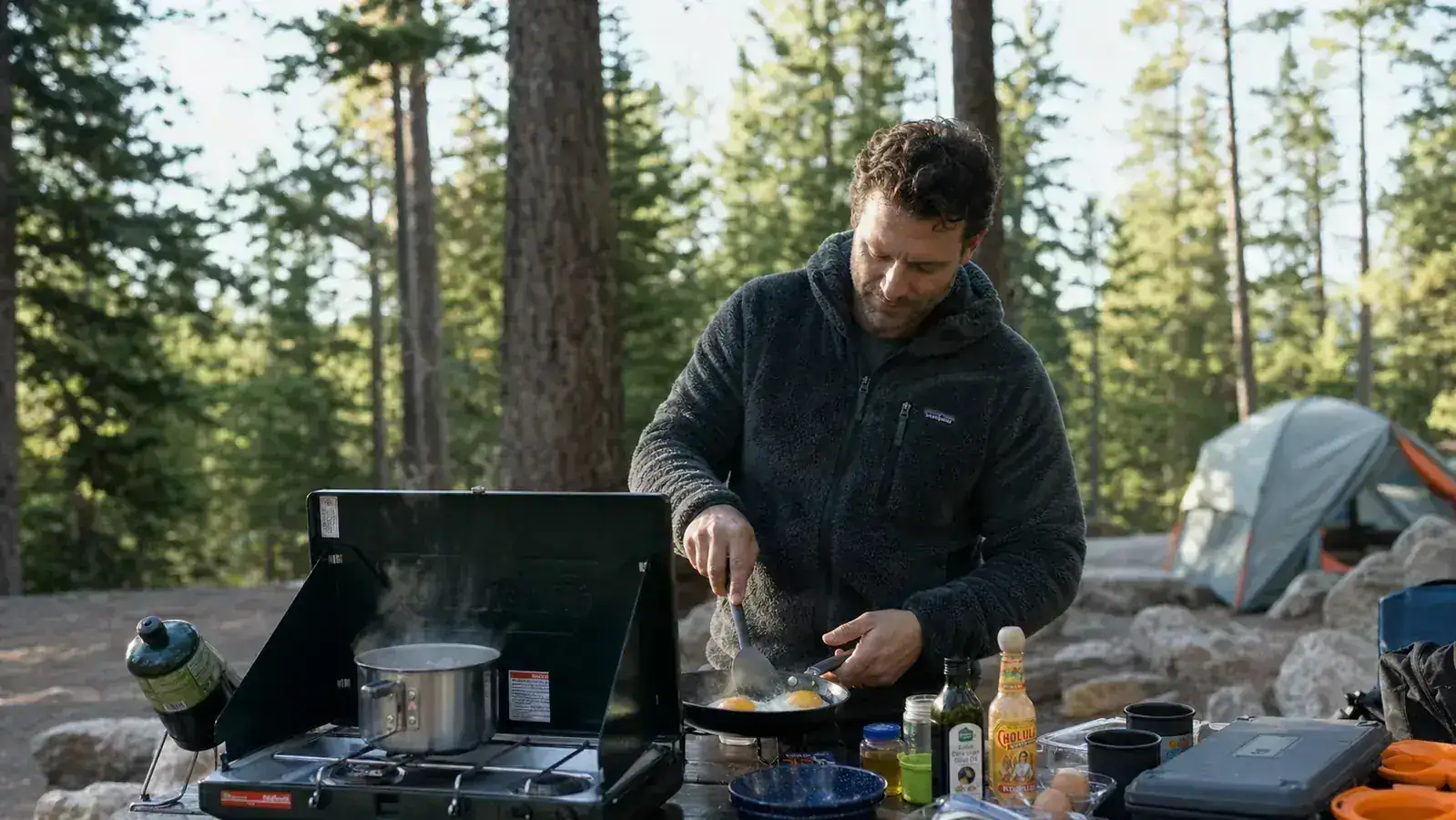
I have been camping in Colorado almost every other weekend from May through October for the past eight years. In that time I have cooked on backpacking canister stoves, car-camping single burners, open fires, and a handful of two-burner propane rigs. The Coleman Triton 2-Burner is what I run now, and it is the reason I stopped dreading camp cooking. If you are still on a single burner, I get it. It seems simpler. But after ten trips trying to time a pot of oatmeal against scrambled eggs on one flame, I switched and never went back.
Here are the ten reasons that convinced me, and why they show up on every trip, not just the fancy ones.
Still wrestling with one burner at the campsite? Here is the stove that fixes that.
The Coleman Triton 2-Burner is rated 4.7 stars across more than 3,500 verified purchases. Two independently adjustable burners, a windshield that actually works, and it folds flat for the truck. Check today's price before it sells out ahead of camping season.
Amazon Check Today's Price on Amazon →You Cook Two Things at the Same Time
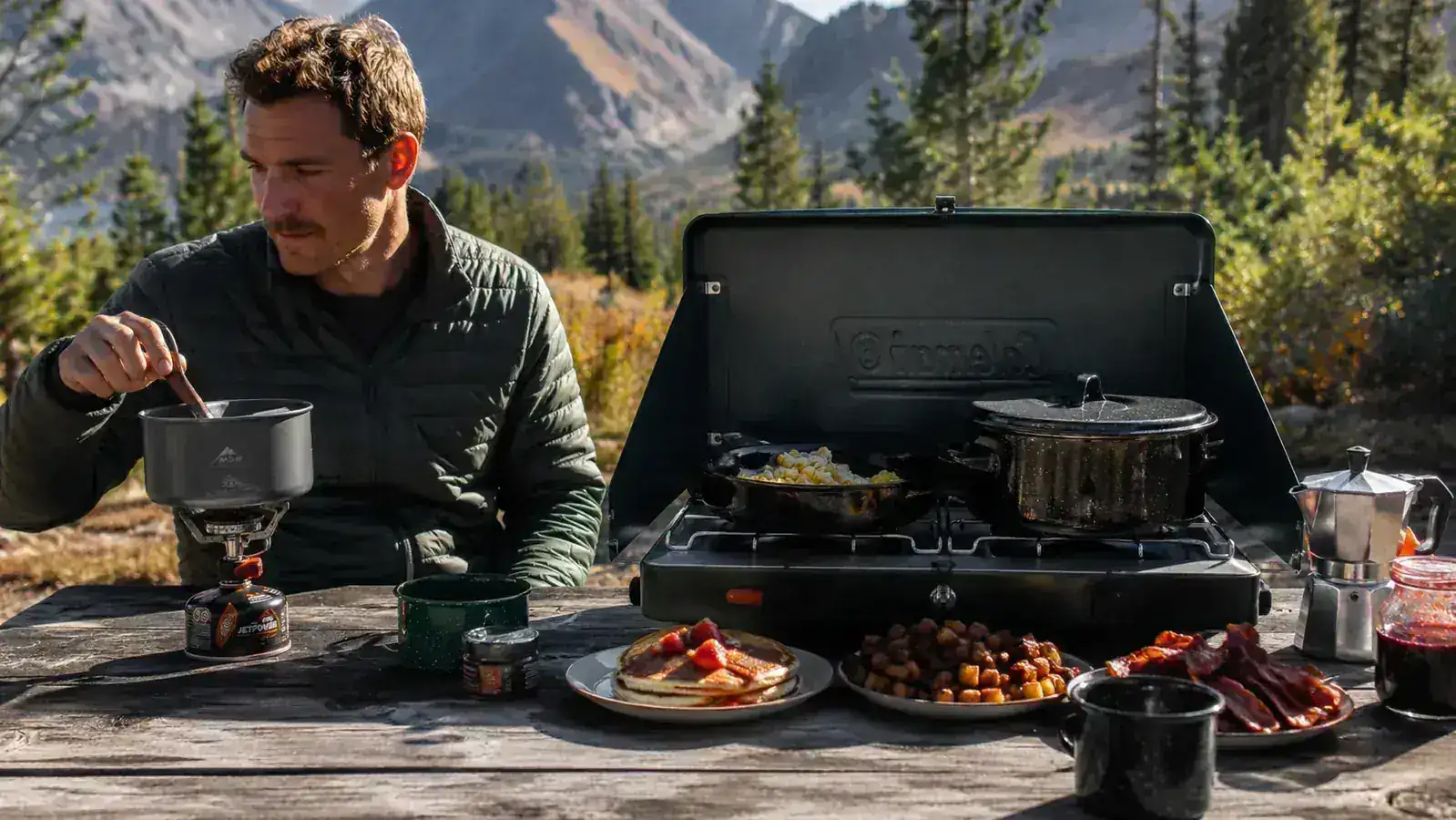
This is the obvious one, but it matters more than people realize until they are standing at the campsite. Eggs and bacon ready together. Pasta boiling while the sauce simmers. Coffee hot while the oatmeal finishes. On a single burner, someone always eats cold food or waits. With two burners, the whole group eats at once. With the Coleman Triton, both burners are independent, so you can run one on high and one on low without them fighting each other.
Breakfast for Four Takes 12 Minutes, Not 35
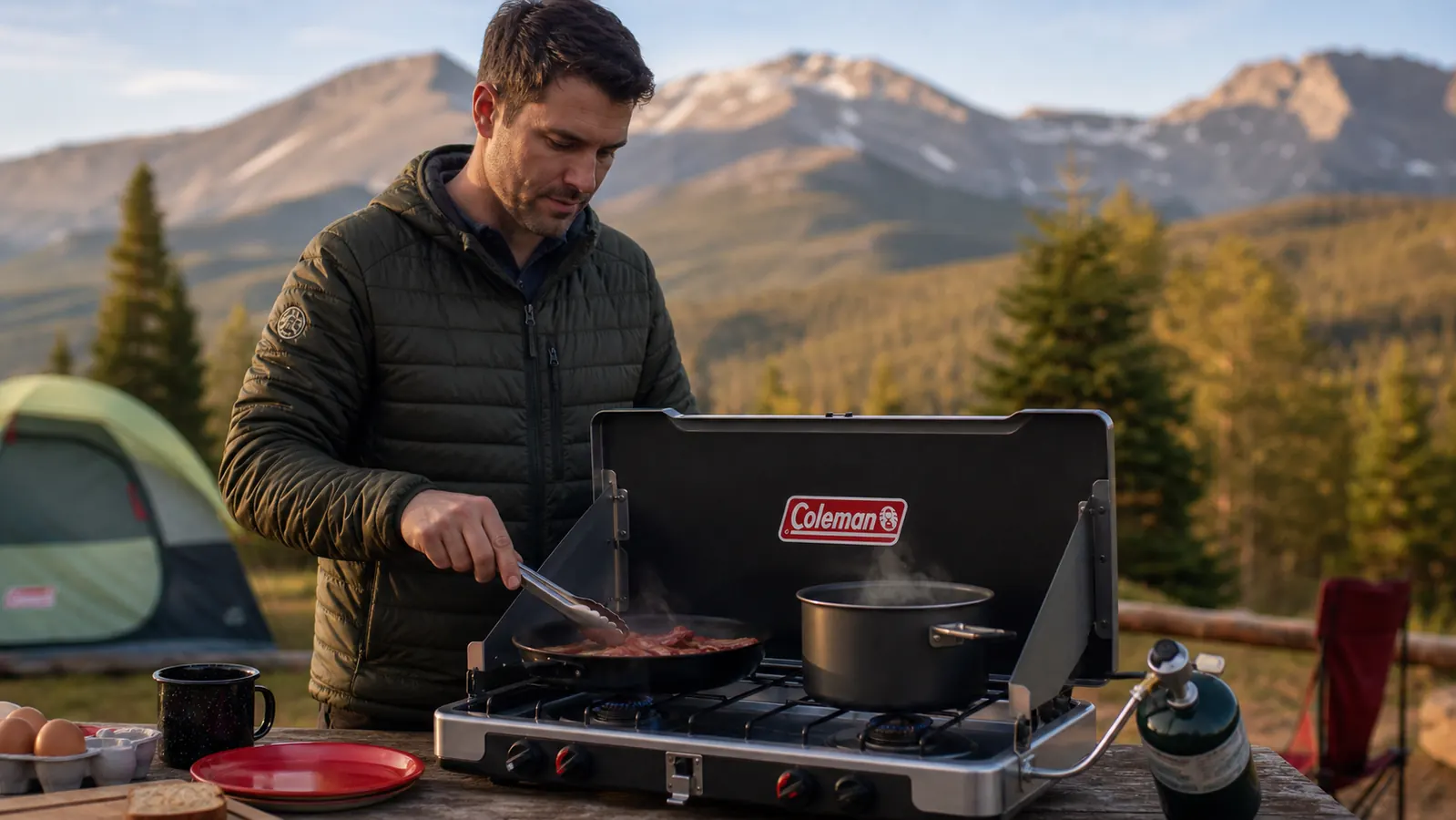
I timed this last August at Eleven Mile State Park with my brother's family. Four adults, eggs and bacon and coffee. On my old single burner, we were eating in shifts at 35 minutes and someone's eggs were always rubbery. On the Triton, we sat down together at 12 minutes. The time difference is not a small quality-of-life upgrade. It is the difference between a good morning and a frustrated one.
The Windshield Is Built In and It Actually Works
Single burners are exposed on three or four sides. At 9,000 feet in Colorado wind, you spend more time blocking the flame with your body than cooking. The Coleman Triton has side panels that fold out to block the wind on both sides of both burners. It is not perfect in a gale, but in normal campsite conditions, the flame stays stable and you stop wasting propane fighting the breeze.
It Runs on the Same Propane Canisters You Already Own
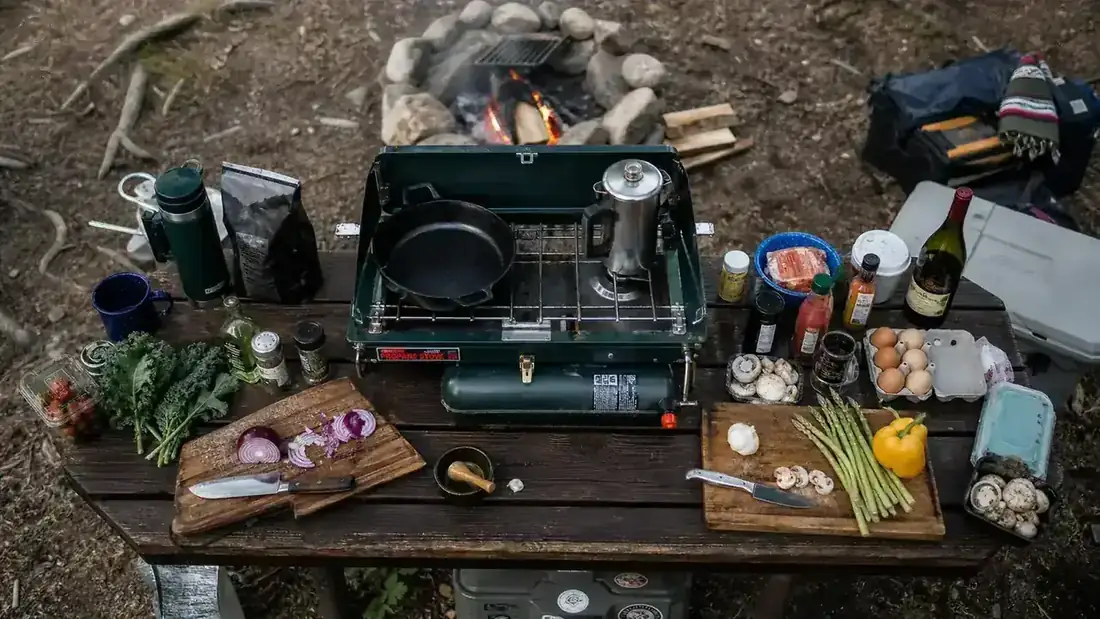
The Triton uses standard 1-lb green Coleman propane canisters, the same ones that run camp lanterns, portable heaters, and most other gear. You can buy them at any grocery store, Walmart, or gas station near the campground. No proprietary canisters, no hunting for a specific brand. A single canister runs about 1.5 hours at full blast on both burners, which is enough for a full weekend of cooking if you are not careless.
It Folds Flat and Fits in the Truck Without a Fight
My concern before buying was bulk. I had a mental picture of a massive restaurant-style griddle taking up half the truck bed. The Coleman Triton folds in half like a briefcase. The side panels collapse inward, the grates stack flat, and the whole thing packs to about the size of a large cutting board. It fits in my 4Runner next to the cooler without reorganizing anything.
On a single burner, someone always eats cold food or waits. With two burners, the whole group eats at once.
The Grate Surface Is Large Enough for a 12-Inch Cast Iron Skillet
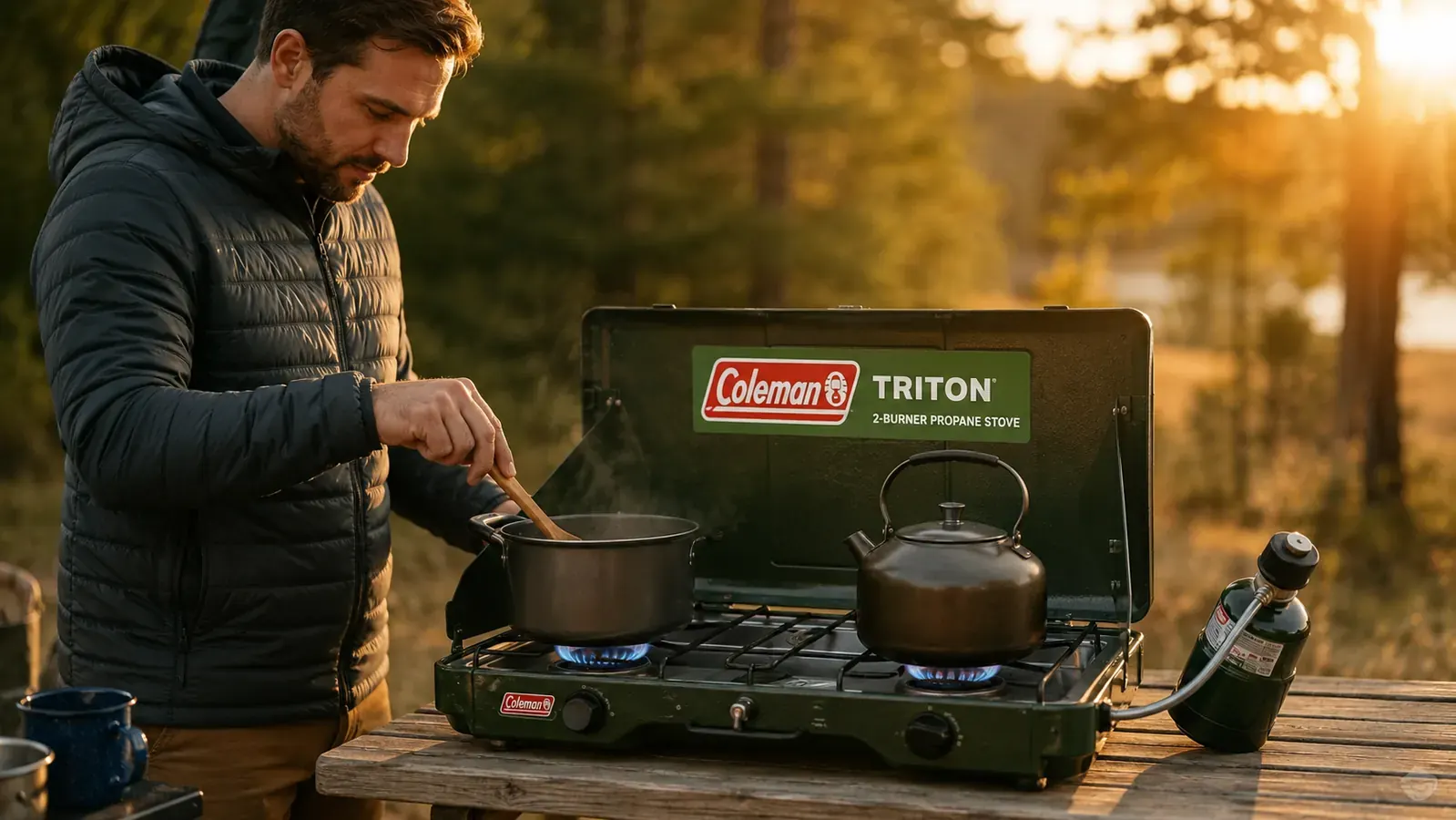
Single burners are sized for small pots. If you try to put a 12-inch cast iron on most single burners, it wobbles and you are risking a hot pan on your foot. The Triton's grate spans both burner areas, so a full-size cast iron sits stable and flat. I cook with a Lodge 12-inch on it every trip. No wobble, no drama.
BTU Output Is Enough for a Full Rolling Boil
Each burner on the Triton puts out up to 10,000 BTU. That is enough to get a full pot of water rolling for pasta in about six minutes at a 7,000-foot campsite. Single-burner backpacking stoves often max around 7,000 to 8,000 BTU and fight altitude harder. Two burners at 10,000 each means you can run a genuine camp kitchen, not just a survival heating element.
One Burner Can Hold Coffee While the Other Handles the Meal
Coffee is non-negotiable for most campers, including me. On a single burner, you have to choose between heating your coffee and cooking the food. On the Triton, I leave the percolator on low on the left burner and cook everything else on the right. Nobody goes without coffee and nobody waits for their food to get cold while the coffee brews. This sounds small and it is not.
Cleanup Is Faster Because Spills Stay Contained
The Triton has a drip tray under the grates that catches grease and food debris. On a single burner canister stove, everything that spills goes directly onto whatever surface the stove is sitting on. The drip tray is not glamorous, but after a full weekend of cooking eggs and bacon, I am glad I do not have to scrub my picnic table or the lid of the cooler it was resting on.
It Costs About the Same as a Decent Single Burner Backpacking Stove
A quality single-burner canister stove from a name brand runs in the mid range. The Coleman Triton 2-Burner lands in the affordable range at today's prices. For a modest difference, you get a second burner, a windshield, a drip tray, and a cooking surface three times the size. The math makes sense for anyone doing car camping or campground cooking with more than one person. The only scenario where a single burner wins is if you are backpacking and weight is the primary constraint.
What I Would Skip
The Coleman Triton is not the right call for backpackers or anyone counting ounces. It weighs about seven pounds, which is fine for the truck but not for a 12-mile trail with an overnight pack. If weight is your primary constraint, a single-burner canister stove makes more sense. Also, the igniter on mine has never been reliable in cold weather, so I always bring a lighter. Coleman's push-button igniter is a nice idea but treat it as a backup, not a primary.
For anyone else, anyone doing campground cooking, car camping, family trips, group weekends, or any situation where you are cooking real food for more than one person, the two-burner setup is the right tool. I have used mine on more than 40 camping trips and it has never failed a meal. That is a track record I trust.
If you want a deeper look at how the Triton performs across seasons and conditions, I wrote up a full long-term review at Coleman Triton Stove: My Go-To Camp Kitchen After 40+ Camping Trips. And if you want to put it to use with actual recipes, the guide on how to cook real meals camping with a propane stove walks through the full setup I use every weekend.
Two burners, one stove, zero cold plates at the campsite.
The Coleman Triton 2-Burner is the stove I recommend to every friend who asks what to cook on at camp. Rated 4.7 stars with over 3,500 reviews, independently adjustable burners, built-in windshields, and it packs flat. Worth every dollar compared to fighting a single burner all weekend.
Amazon Check Today's Price on Amazon →