
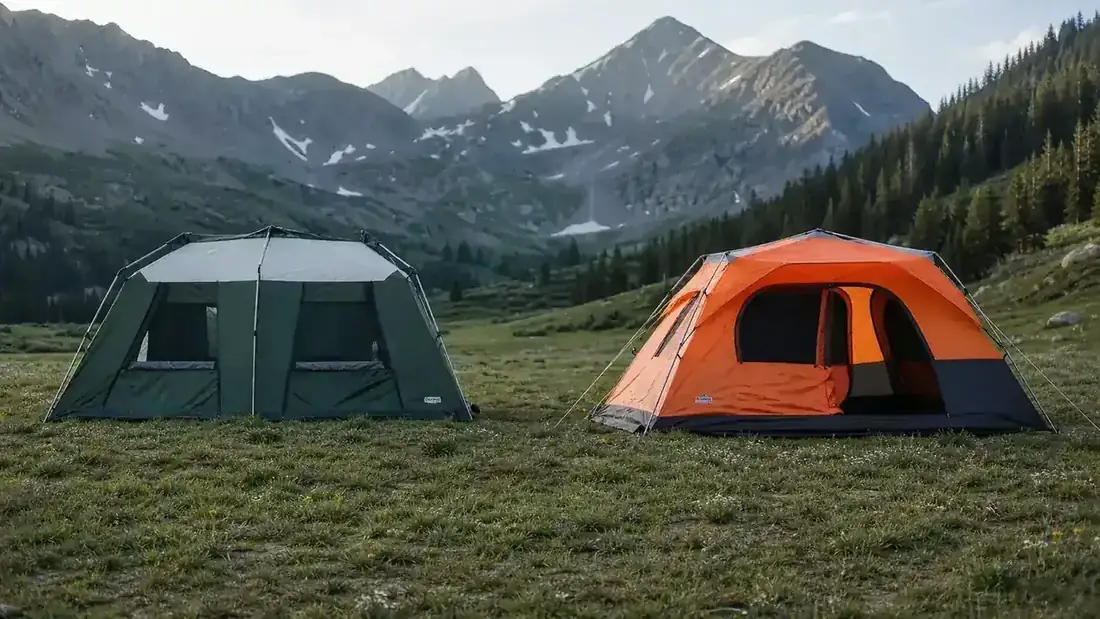
If you've spent any time looking for a family tent on Amazon, the Coleman Montana and the CORE Instant Tent have probably both shown up on your screen. They're close in price, close in capacity, and close in star ratings. On paper, picking one feels like a coin flip. It isn't. After pitching both tents at campgrounds in Colorado, Wyoming, and New Mexico, I can tell you they're built around completely different priorities. One is designed for speed. The other is designed to last.
Short answer: buy the Coleman Montana if you camp more than a handful of times a year and want a tent that handles real weather, has genuine standing room, and stays dry when conditions turn ugly. Buy the CORE Instant if setup speed is the only thing that matters and you're mostly camping in mild conditions on established, mowed-grass sites.
| Coleman Montana 8-Person | CORE Instant 9-Person | |
|---|---|---|
| Floor Area | 100 sq ft (10 x 10 ft) | 100 sq ft (14 x 9 ft, narrower layout) |
| Peak Height | 6 ft center height | 6 ft center height |
| Packed Weight | 28 lbs | 26 lbs |
| Setup Time | 15-20 min (standard poles) | 2 min (pre-attached hub poles) |
| Weather Rating | WeatherTec with welded floors and inverted seams | 1200mm hydrostatic head, taped seams |
| Room Divider | Included (2-room option) | No divider included |
| Windows | 6 windows with mesh + privacy panels | 3 windows with mesh panels |
| Pole Material | Steel frame, fiberglass uprights | Pre-attached steel hub frame |
| Amazon Rating | 4.4 stars (4,590 reviews) | 4.3 stars (~2,800 reviews) |
Stop sleeping in a wet tent. The Montana's WeatherTec system fixes that.
The Coleman Montana 8-Person is currently available on Amazon. Check today's price and see if it's in stock before your next trip.
Amazon Check Today's Price on Amazon →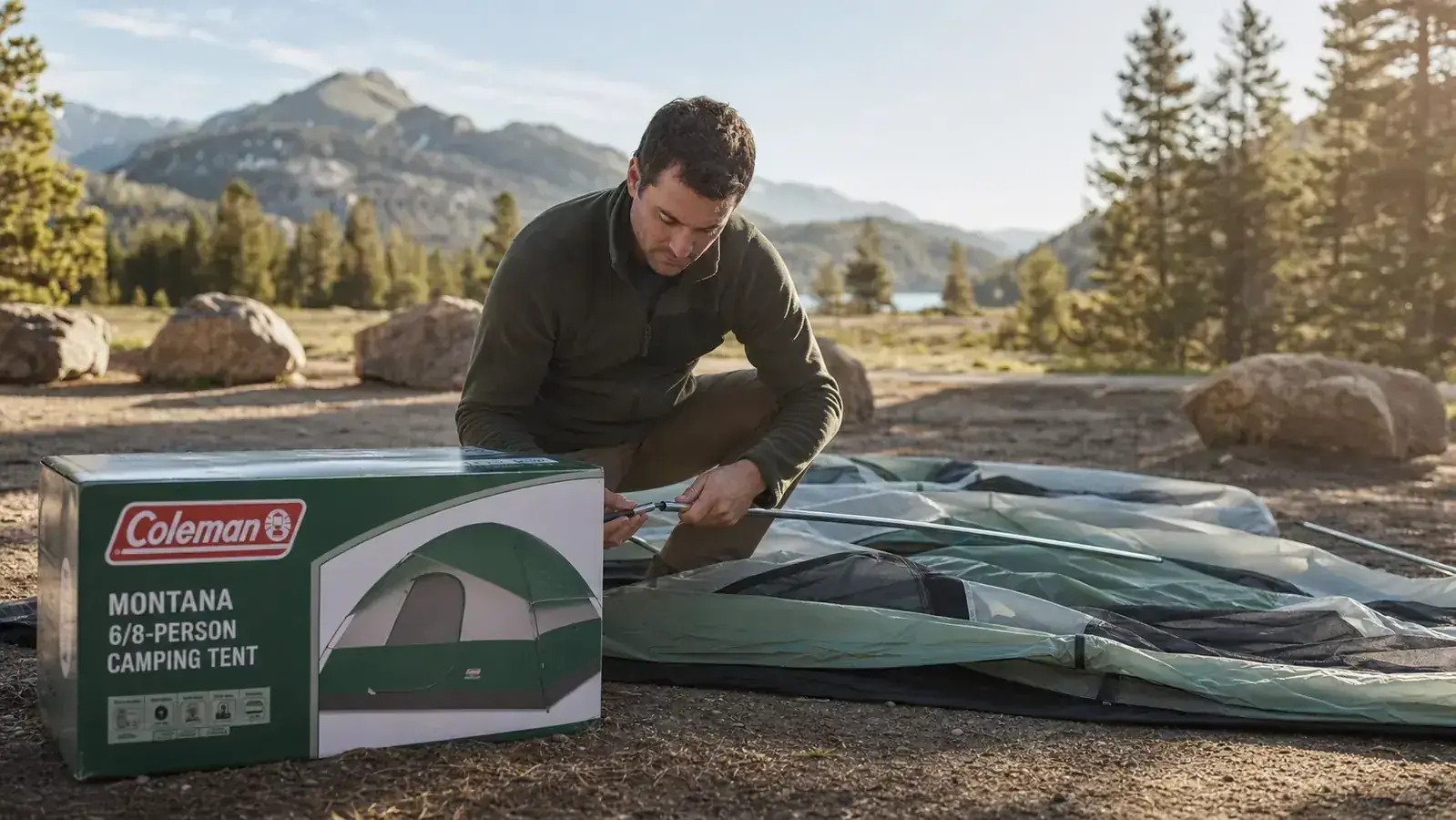
Where the Coleman Montana Wins
The Montana's strongest advantage is its weather system. Coleman's WeatherTec uses welded floors and inverted seams, which means water hits the outside of the stitching rather than wicking through. I've had the Montana up in a sustained Colorado downpour, and the floor stayed bone dry. The rainfly covers the entire tent and extends low enough to keep sideways rain from sneaking under the edge. That's not something I can say about every tent at this price.
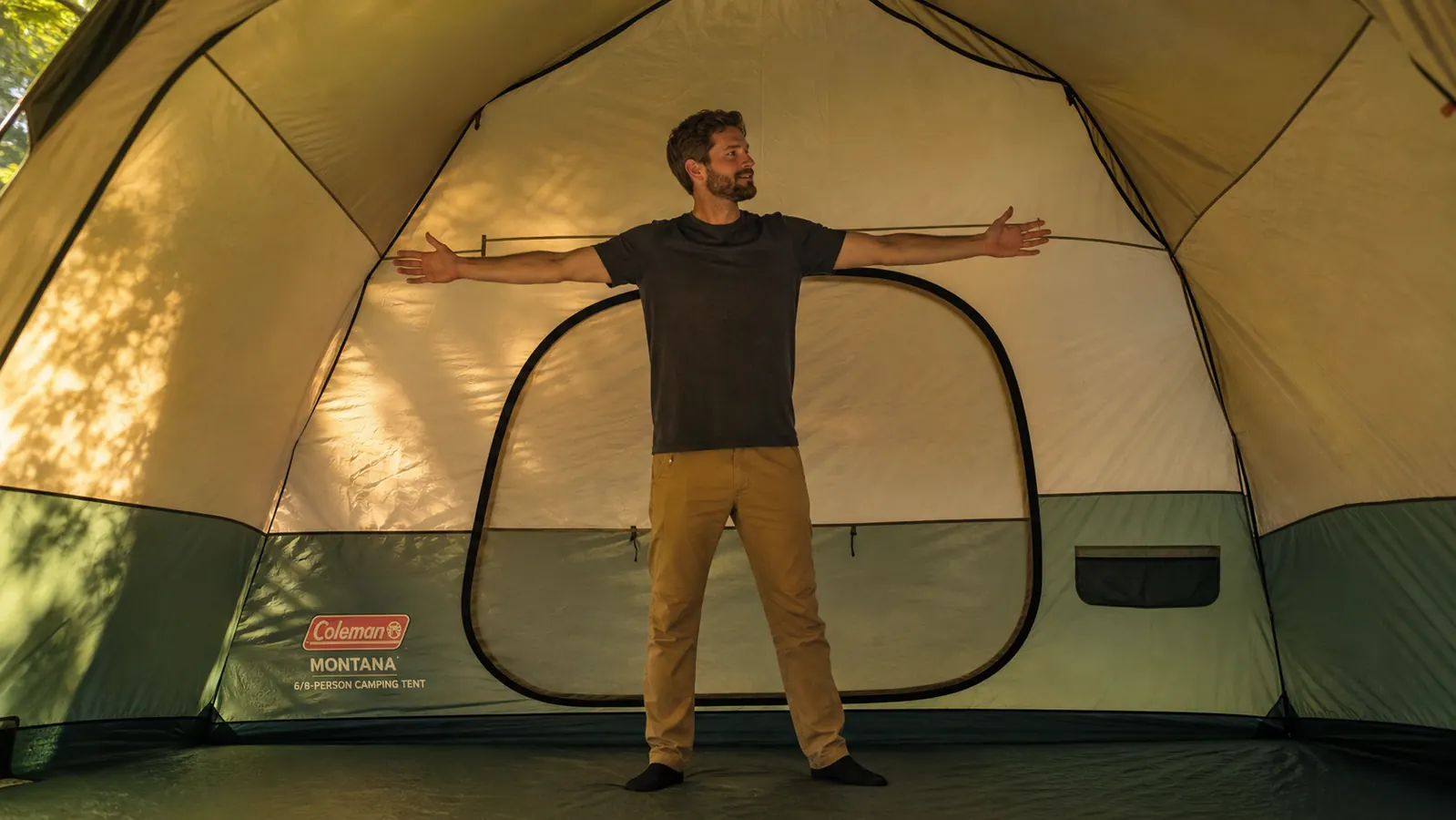
The second win is interior space. The Montana's square cabin-style walls give you honest headroom all the way to the edges, not just in the center. My family of four (two adults, two kids under 10) can stand up and move around without hunching or bumping into sloped walls. The removable room divider turns it into two separate sleeping areas, which matters a lot at 9pm when one kid wants to stay up reading and the other is trying to sleep. Most tents at this price skip the divider entirely.
Ventilation is another area where the Montana earns its keep. Six windows with independently closeable mesh panels and privacy liners means you can have airflow without sacrificing visibility or warmth control. On humid July nights in Colorado, that matters. And the E-Port, a dedicated port for running an extension cord inside, is a small touch that pays off on long trips where you need to charge devices or run a small fan.
After a 2am rainstorm hit our site in the San Isabel National Forest, I woke up and did a floor check. Completely dry. That's what I'm paying for.
Where the CORE Instant Tent Wins
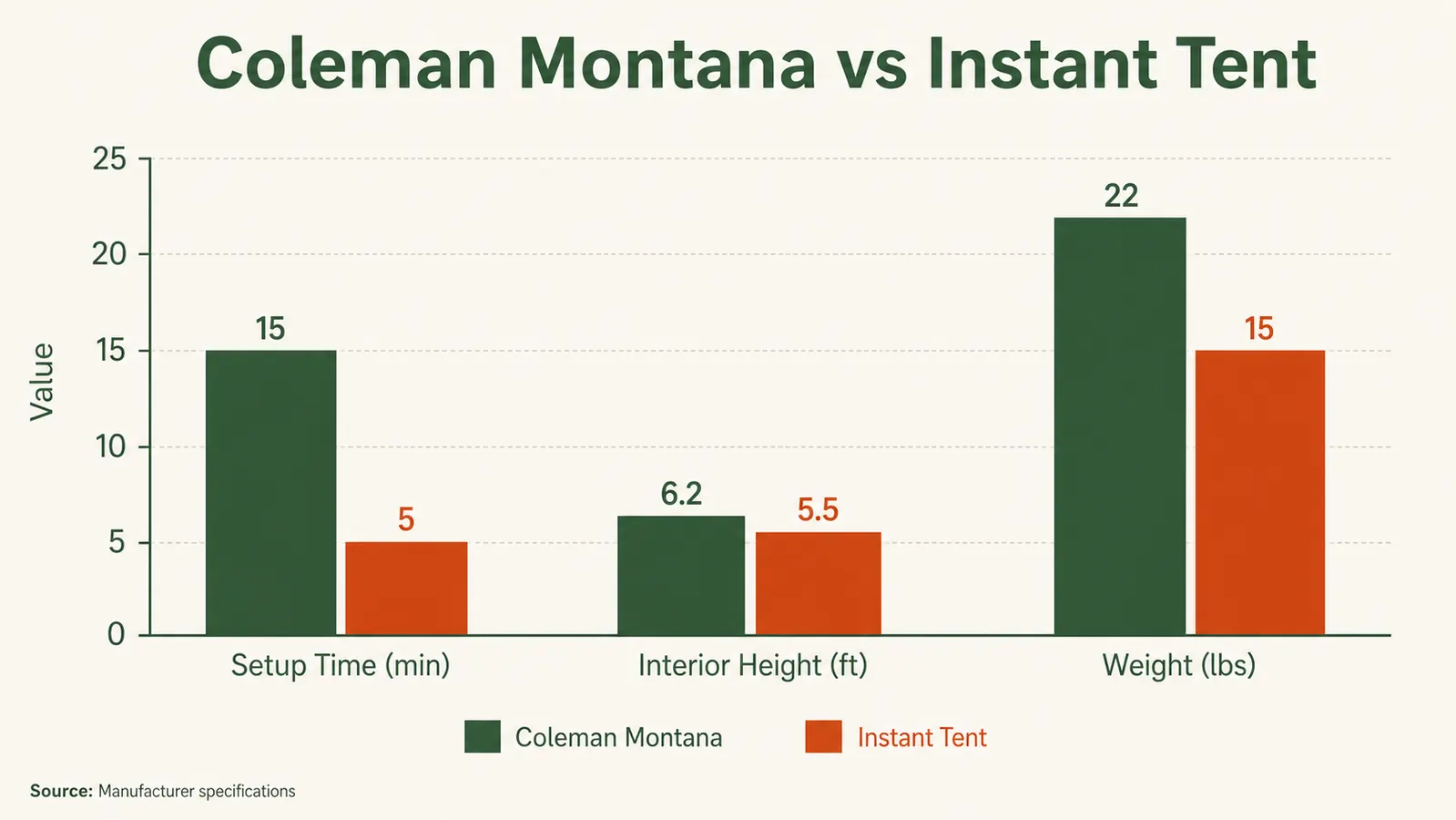
The CORE's genuine advantage is setup speed. The poles are pre-attached to the hub frame, so you unfold the collapsed frame, lift the center, and stake it out. That's genuinely about two minutes. If you're pulling into a campground after a four-hour drive with cranky kids and fading daylight, that matters. On the first trip I ever used the CORE, I had it up before my camp chair was out of the truck. There is no pole-color-matching, no threading, no hunting for the right clip.
The CORE also packs down into a long wheeled bag that rolls instead of lifts, which is a practical convenience for solo setup. The storage bag design is more thoughtful than the Coleman's stuff-sack, which requires you to fold the tent a specific way or it won't fit back in cleanly. On that note, the CORE's pack-down process is faster too, though not by the same margin as the setup.
The Tradeoffs You Need to Know
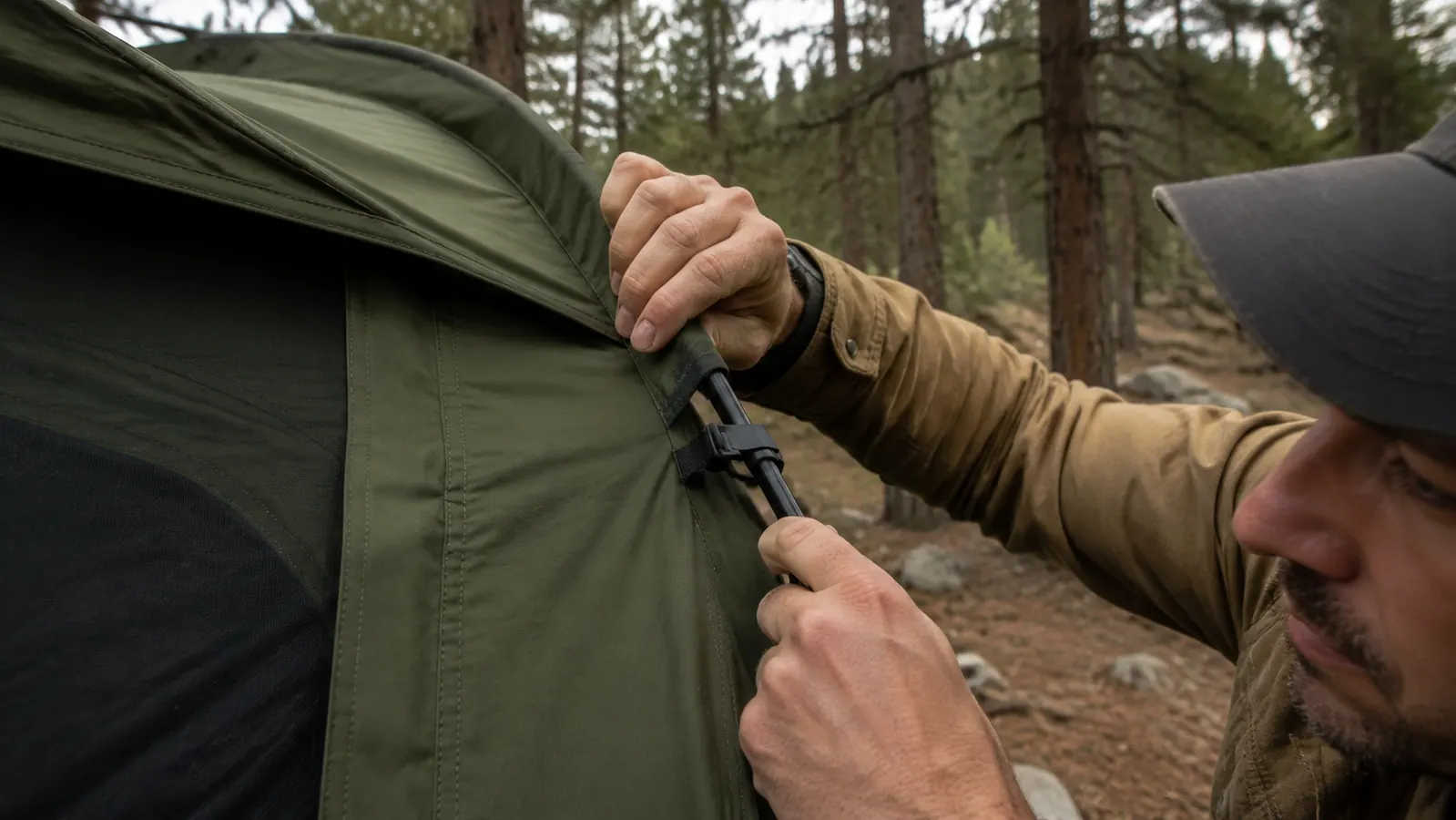
The CORE's Achilles heel is the hub frame. Pre-attached poles are convenient right up until one of them gets damaged or bends, and then you're dealing with a tent that can't be partially repaired. Coleman sells individual poles for the Montana. CORE's integrated frame doesn't lend itself to that kind of field fix. Three years into Montana ownership, I bent a pole on a rough site and had a replacement shipped for cheap. With the CORE's frame, a damaged hub can effectively end the tent's life.
The CORE's weather resistance is also rated lower than the Montana's. The 1200mm hydrostatic head rating is adequate for light rain. In a sustained storm with driving wind, I noticed condensation and slight seepage near the door seam on one trip in New Mexico. Not a flood, but enough that I moved my gear bag to the center. The Montana's WeatherTec system simply performs better in genuinely bad weather. If you camp during shoulder season, in the mountain West, or in areas where afternoon thunderstorms are common, that gap matters.
The CORE's layout is also worth noting. The 14-by-9 footprint is narrower than it sounds, and the tent can feel like a long hallway when you have sleeping bags and pads laid out for a family. The Montana's more square 10-by-10 footprint distributes space more evenly, which means less stepping over each other at night.
Who Should Buy Which
Buy the Coleman Montana if you camp more than three or four times a year, if you camp anywhere with unpredictable weather, if you want a tent that will last five or more seasons with basic care, or if sleeping in two separate rooms makes your family's life easier. The 15-minute setup is a real commitment compared to the CORE, but once you've done it ten times it goes smoothly. I can get the Montana up solo in about 18 minutes now.
Buy the CORE Instant if you camp two or three times a year on mild-weather trips, if you always have someone to help carry (that rolling bag is long), and if setup speed is the deciding factor for you. Just accept that it's not a foul-weather tent and plan accordingly. It's a solid fair-weather family tent at a fair price.
For what it's worth, when I look at which tent is in the back of my 4Runner on any given Friday afternoon in June, it's the Montana. That's the honest answer. I've recommended the CORE to neighbors who camp occasionally and have told them exactly what it does and doesn't handle. For serious weekend campers in the mountain West, or anyone who expects to be in real weather at some point, the Montana is the better investment.
If you want a deeper breakdown of long-term durability and what two full seasons of use looks like with the Montana, I covered that in my Coleman Montana long-term review. I also wrote up the things most reviews miss in my honest Coleman Montana review for a different angle on the same tent.
The Montana has 4,590 Amazon reviews for a reason. See what today's price looks like.
If you're camping more than a few times a year, the Coleman Montana's weather protection and build quality are worth the extra setup time. Check availability and current pricing on Amazon.
Amazon Check Today's Price on Amazon →