
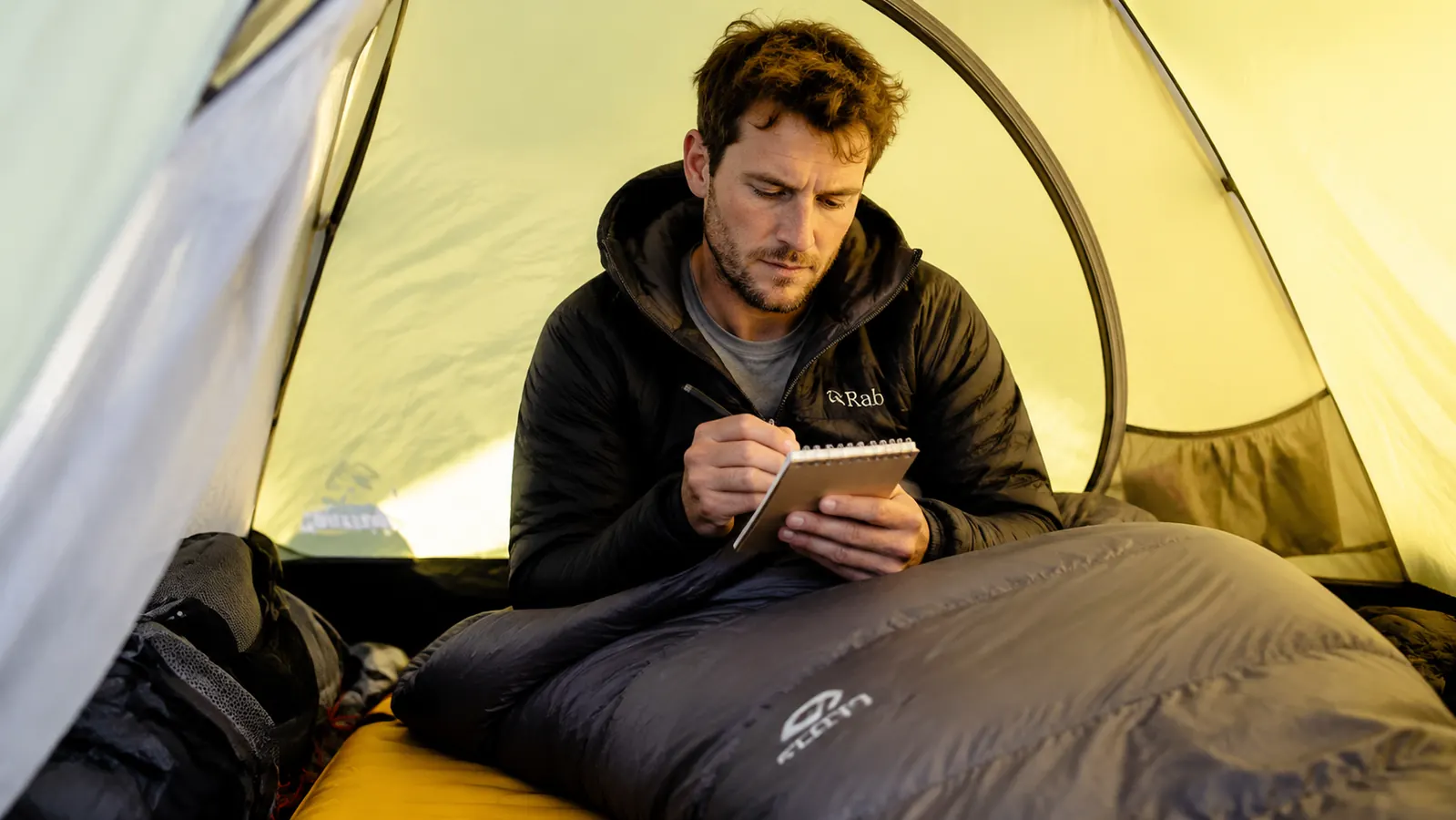
Last September I drove up to Eleven Mile Canyon Reservoir with my buddy Dan, expecting a crisp but manageable night. By 2 a.m. my phone said 18 degrees. I was zipped tight inside the TETON Sports TrailHead mummy bag, wearing a wool base layer, and I was warm. Not cozy-couch warm, but sleep-through-the-night warm. That surprised me, because this bag is rated to 20 degrees Fahrenheit and costs around $66. I've been burned by optimistic temperature ratings before, so I went in skeptical. This review covers four separate Colorado camping trips with the TrailHead, ranging from shoulder-season car camping to a late-October backpacking run. If you're trying to figure out whether this bag will actually keep you warm, or whether you're buying a marketing claim, read on.
Quick note on what I mean by 'keep you warm': surviving a cold night and sleeping comfortably through it are two different things. A bag rated to 20F should let a cold sleeper survive to 20F and let an average sleeper sleep comfortably down to around 30-35F. That's the EN/ISO rating standard logic. The TrailHead doesn't carry an official EN rating, which matters. I'll get into that.
The Quick Verdict
A genuine 30-35F comfort bag that punches above its price. Not a technical alpine bag, but a smart buy for three-season car camping and light backpacking.
Amazon Check Today's Price →Still sleeping in a bag that leaves you shivering at 2 a.m.? This one costs $66 and actually delivers.
The TETON TrailHead has 1,735 reviews and a 4.5-star average. Check current pricing on Amazon before your next trip.
Amazon Check Today's Price on Amazon →How I've Used It
I've taken the TETON TrailHead out on four trips over about eight months. Trip one was a warm July night at Chatfield State Park, where it was 55 degrees and the bag was obviously overkill but let me evaluate the fit and zipper without cold-weather stress. Trip two was late August at Rocky Mountain National Park, overnight low around 38 degrees. Trip three was September at Eleven Mile Canyon (that 18-degree night I mentioned). Trip four was a two-night backpacking run in mid-October near South Platte, with lows of 27 and 31 degrees respectively.
I weigh 180 lbs, run warm by default, and I sleep in a synthetic base layer on cold nights. I used a 2-inch foam sleeping pad for the car camping trips and a Therm-a-Rest Z Lite for the backpacking run. Pad R-value matters a lot with any bag and I'll address that separately. For now, the short answer: over eight nights ranging from 55F down to 18F, I slept fine on every trip except the backpacking run at 27 degrees, where I was noticeably cold in the early morning hours and had to pull my jacket inside the bag.
That single cold night gives me useful calibration. The bag held up well to 31 degrees with the foam pad. At 27 degrees on a trail pad with less insulation underfoot, it started losing the thermal battle around 4 a.m. That aligns with a realistic comfort rating in the low-to-mid 30s, not 20F. Important distinction.
Fill, Construction, and What TETON Actually Gives You
The TrailHead uses polyester fiberfill insulation, not down. TETON calls it their 'C-Series' fill. The shell is a ripstop nylon exterior with a soft taffeta lining. Construction is offset layered quilting, which eliminates cold spots better than single-layer quilting. The zipper is a full-length YKK design with an anti-snag draft tube running behind it. I've run the zipper in frozen gloves at 2 a.m. and it has never stuck. That's not a small thing. I've owned more expensive bags where the zipper was a fight in the cold.
The hood is cinchable with a single drawstring pull, which tightens down to leave just your nose and mouth exposed. On the 18-degree night I pulled it tight and it worked. The shoulder and neck area has a collar baffle that helps prevent warm air from escaping out the top. It's not as tight a seal as a higher-end bag, but it does its job at the price point. One thing I noticed: the hood cinch can loosen slightly if you move around a lot in your sleep. I started tying a small knot in the cord to keep it from slipping, which fixed it.
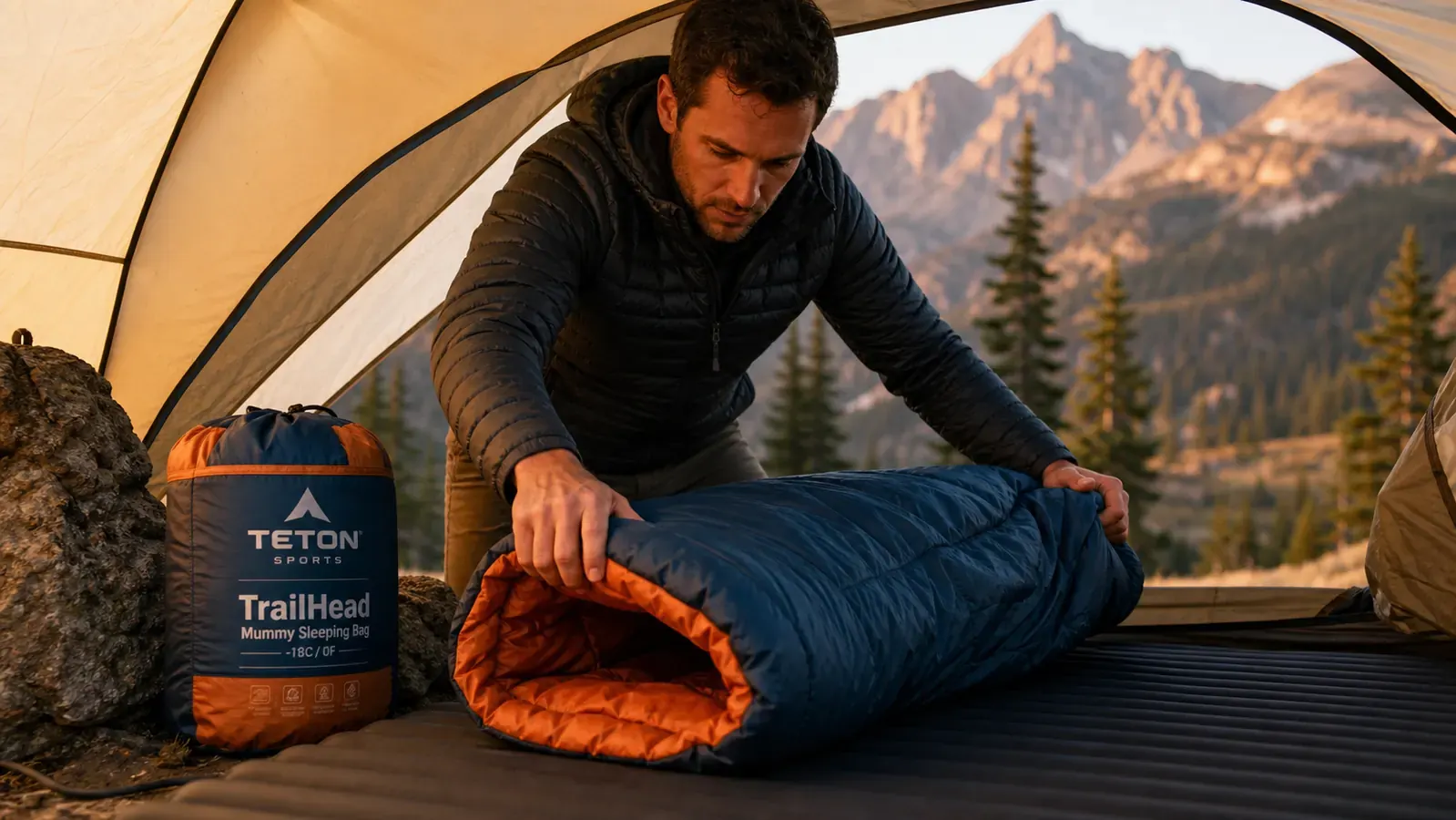
The bag comes in a large stuff sack, not a compression sack. Stuffed down to its natural volume, it's roughly the size of a soccer ball. That's fine for car camping and fits easily in a truck cab or tent vestibule. For backpacking, you'll want to buy a separate compression sack. I picked up a 20L nylon compression sack for about $12 and got it down to about 5.5 liters, which fits inside a 40-liter pack. Not ultralight territory, but manageable for weekend trail use.
Temperature Rating: The Part Where I Get Specific
TETON rates the TrailHead to 20 degrees Fahrenheit. That rating is not EN/ISO certified. It's a manufacturer claim. Based on eight nights of use, here's what I'd actually say the bag does: comfortable sleep for an average adult down to about 32-35F with a quality sleeping pad under you. Survival-level warmth to about 20-25F if you're layered in base layers and wool socks. Below 25F, you're going to notice it, especially in the early morning hours when body heat drops and your sleeping pad's R-value becomes critical.
This doesn't mean the rating is dishonest. It means manufacturer temperature ratings on non-certified bags are often 'survival' ratings, not 'comfort' ratings. If you know that going in, you can plan accordingly. For Colorado camping from May through early October, the TrailHead is genuinely appropriate. For late October and November trips at elevation, bring a liner or a warmer bag.
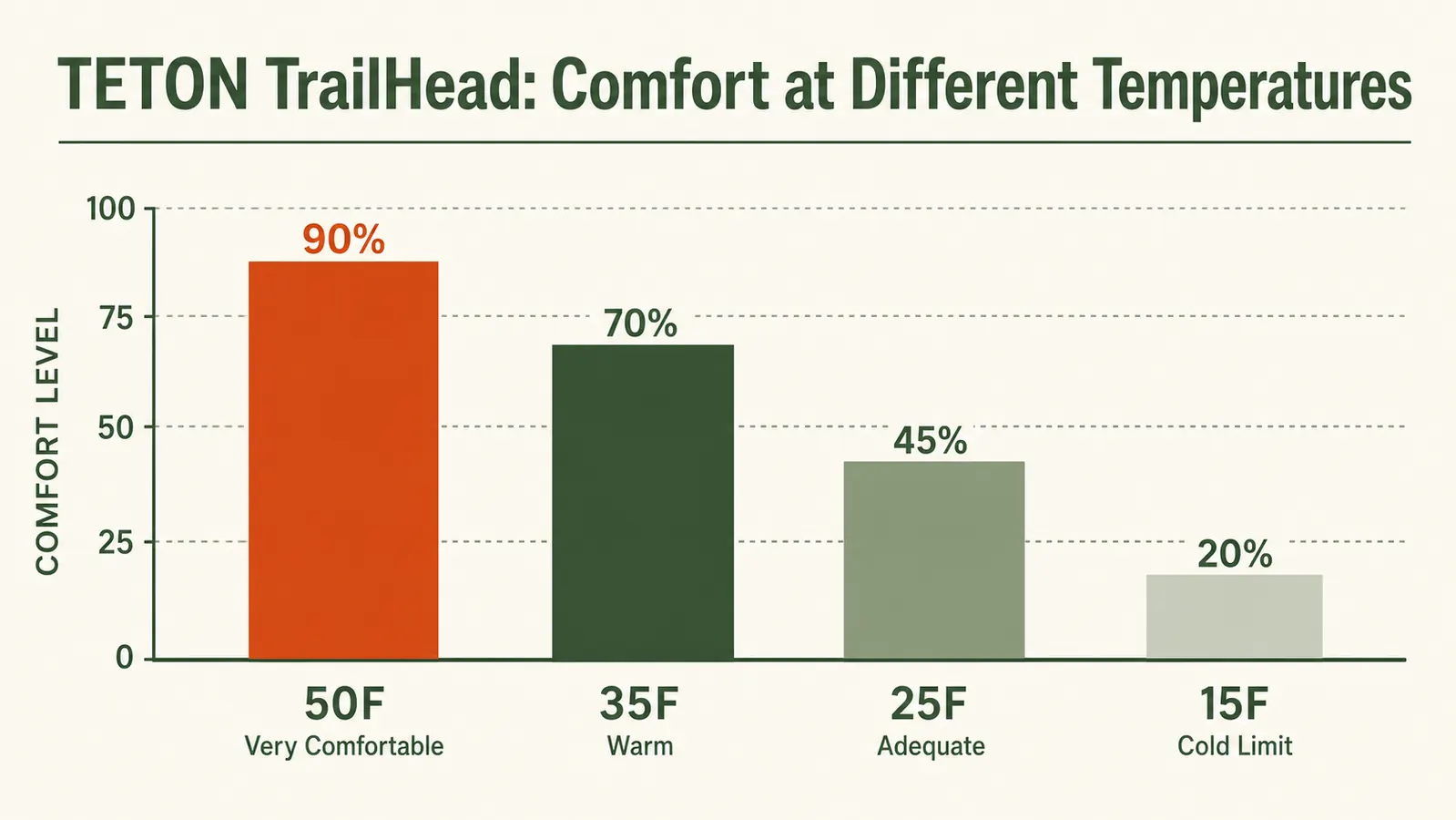
Eight nights, lows from 18F to 55F. I slept well in it down to 31 degrees. At 27 degrees on a thin pad, it started losing the fight around 4 a.m. That's honest.
Weight and Packability for Backpackers
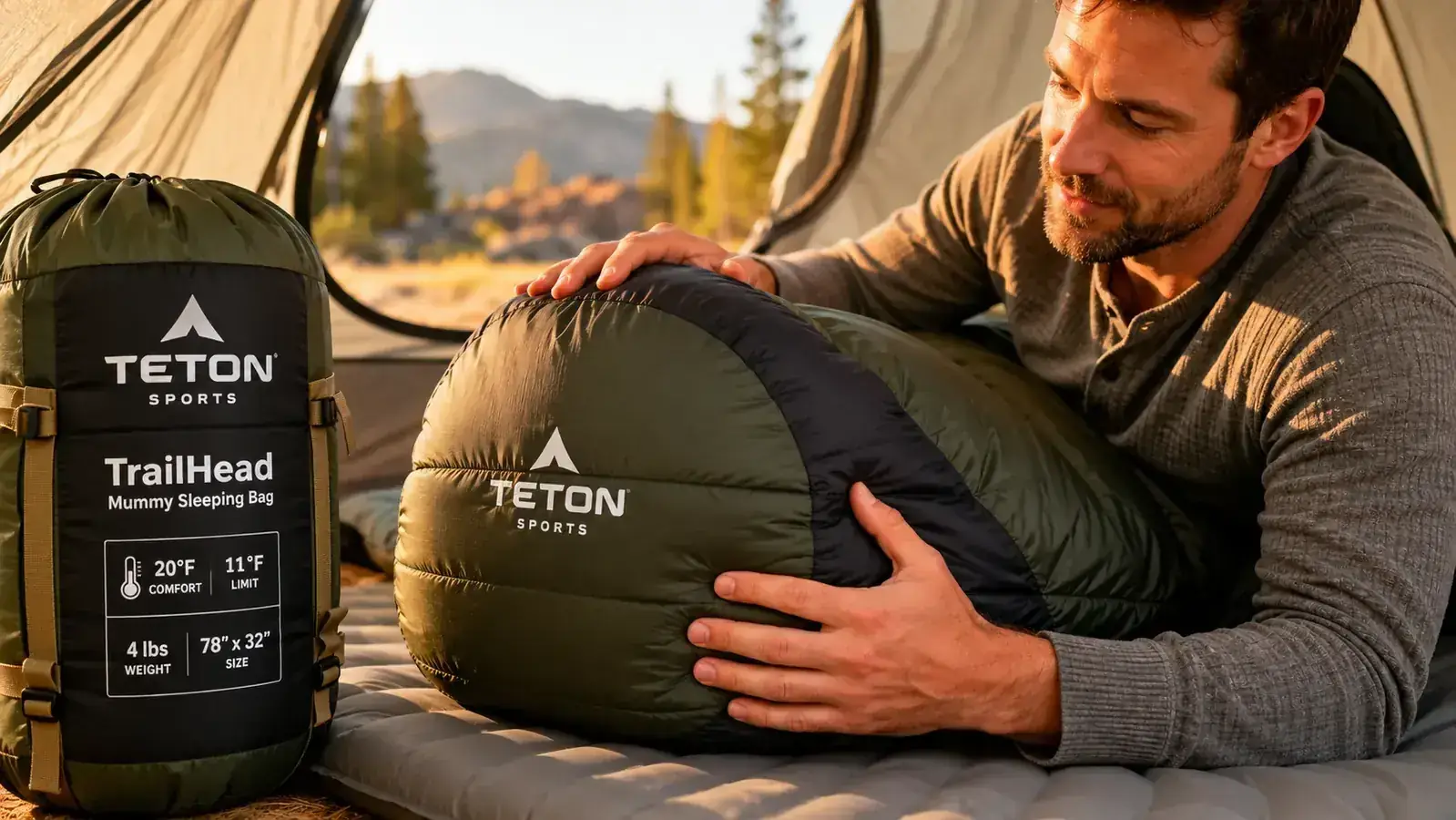
The TrailHead weighs 3 lbs 10 oz for the regular size. That's not a backpacking weight. For context, a comparable three-season down bag from a brand like Kelty or Marmot typically runs 1 lb 12 oz to 2 lbs for the same temperature range. The TrailHead is almost twice as heavy as those options. If you're thru-hiking or gram-counting, this bag isn't the right tool. If you're doing car camping or short backpacking trips where you're not counting every ounce, the weight is acceptable.
I took it on the South Platte backpacking run in my 40-liter Osprey pack alongside two days of food and a bivy-style shelter. Total pack weight was around 28 lbs. Heavy for a two-nighter, but not unreasonable. The weight became more of an issue on the uphill approach than in camp. If backpacking is more than an occasional thing for you, I'd save up for a down bag. But as a first mummy bag for someone stepping up from a department-store rectangular bag, the TrailHead's weight is a reasonable trade-off for the price.
Durability Over Eight Months
After four trips and two laundry cycles, the TrailHead is holding up fine. The shell fabric shows no fraying, the zipper pull is intact, and the fill hasn't noticeably clumped or shifted. Synthetic fill has one major advantage over down here: it dries faster and doesn't lose its loft when damp. On the September canyon trip, morning condensation got the outer shell slightly wet. By noon it was dry and lofted back to normal. A down bag in the same situation would have taken longer to recover.
I washed the bag on a delicate cycle in cold water and tumble-dried it on low with two tennis balls. Came out fine. TETON's care instructions say the same. Synthetic bags are genuinely low-maintenance compared to down, and that matters if you're not a gear nerd who enjoys treating and drying down bags correctly after every trip.
What I'd Change
Three things bug me about the TrailHead. First, the stuff sack. It's a drawstring sack with zero compression. TETON should ship this with a compression roll-top. Add $3 to the retail price and include it. Second, the zipper track on the interior draft tube has a tendency to pull into the zipper path when you're trying to close the bag in the dark and in a hurry. It's caught on the draft tube fabric twice, and while it didn't break, it required me to back the zipper out and try again. Frustrating at 2 a.m. in the cold. Third, the bag runs slightly snug in the shoulder width for broad-shouldered adults. I'm a 44-inch chest and I have full movement, but it's not roomy. Anyone broader than me should consider the XL version.
What I Liked
- Legit warmth down to the low 30s with a quality sleeping pad, well above what budget bags usually deliver
- YKK zipper hasn't snagged or stuck across four trips, including use with frozen hands
- Synthetic fill dries fast and doesn't collapse when damp, unlike down at this price tier
- Hood cinch and neck collar baffle work together to seal in heat effectively
- Offset quilt construction eliminates cold spots along the seam lines
- Easy machine wash, no special treatment required
Where It Falls Short
- 3 lbs 10 oz is heavy for backpacking; down bags in the same temp range weigh half as much
- No EN/ISO temperature certification; the 20F rating is a manufacturer claim, not a lab result
- Included stuff sack has no compression; you'll need to buy a separate compression sack for packing
- Shoulder area runs snug for broad-chested adults; check the XL if you're 46+ inch chest
- Hood cinch cord can loosen during sleep if you're a restless mover
Alternatives I Considered
Before settling on the TrailHead for this review cycle, I spent time with the Coleman Brazos (a rectangular bag often paired with Coleman tents) and the Kelty Cosmic 20. The Brazos is cheaper but the rectangular shape loses heat at the foot faster than a mummy design. The Kelty Cosmic is a better bag, especially for backpackers, but it runs about 50 dollars more. For a full side-by-side comparison of how the TETON TrailHead stacks up against the Coleman sleeping bag option, see my TETON TrailHead vs Coleman Sleeping Bag comparison. And if you want to understand the underlying reason mummy bags outperform rectangular bags on cold nights, I wrote out 10 reasons a mummy sleeping bag keeps you warmer that explains the physics in plain terms.
At its price point, the TrailHead doesn't have a strong competitor that beats it on warmth-to-dollar ratio. The Teton Sports Scout 3400 sleeping bag is often mentioned alongside it but it's a slightly different bag targeting more extreme temps. For three-season camping in the $50-80 range, the TrailHead is the one I'd reach for.
Who This Is For
This bag is built for the camper who wants real three-season performance without spending $150 or more. If you camp from April through October in the American West, Rockies, or mountain Southwest, and you're doing car camping or occasional short backpacking trips, the TrailHead handles that range well. It's also a good choice for anyone moving up from a kids' department-store bag or a cheap rectangular bag and wants to understand what a mummy bag actually does. The price makes it low-risk, the quality makes it worth keeping.
It's also smart for families who need multiple bags. Buying three or four TrailHeads for a family car camping trip costs less than one mid-range down bag. The trade-off in weight and packability doesn't matter when everything goes in the truck.
Who Should Skip It
Skip the TrailHead if you're planning winter camping below 20 degrees and need to count on your bag alone to keep you alive. Skip it if you're a serious backpacker who logs 100+ trail miles a season and every ounce in your pack matters. Skip it if you're a truly cold sleeper who runs cold no matter what, because you'll feel the limits of the comfort range faster than an average adult. And skip it if you want an EN/ISO certified temperature rating you can actually trust as a benchmark against other bags.
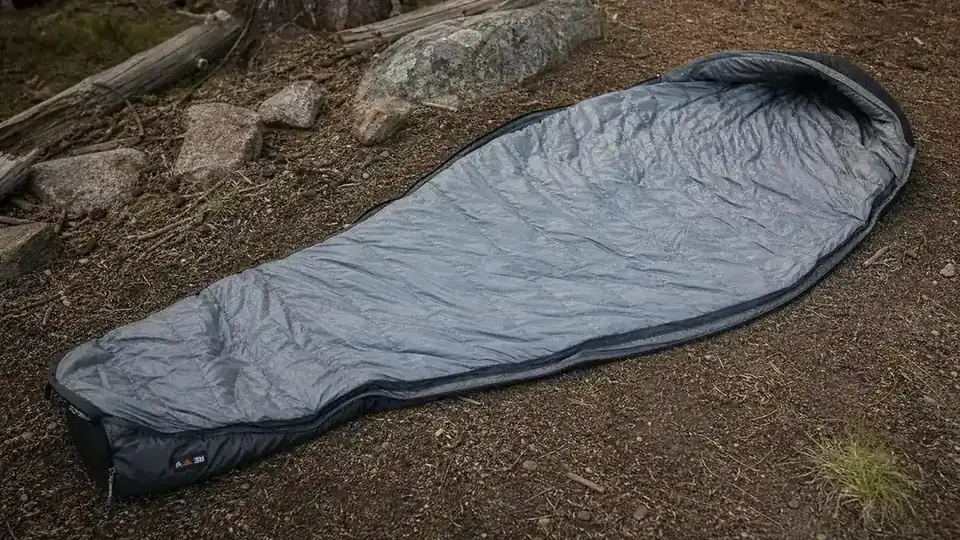
Four Colorado trips, including an 18-degree night. The TrailHead earned its spot in my gear closet.
At current pricing, the TETON Sports TrailHead is one of the better values in three-season mummy bags. Check Amazon for today's price and availability before your next camping trip.
Amazon Check Today's Price on Amazon →