
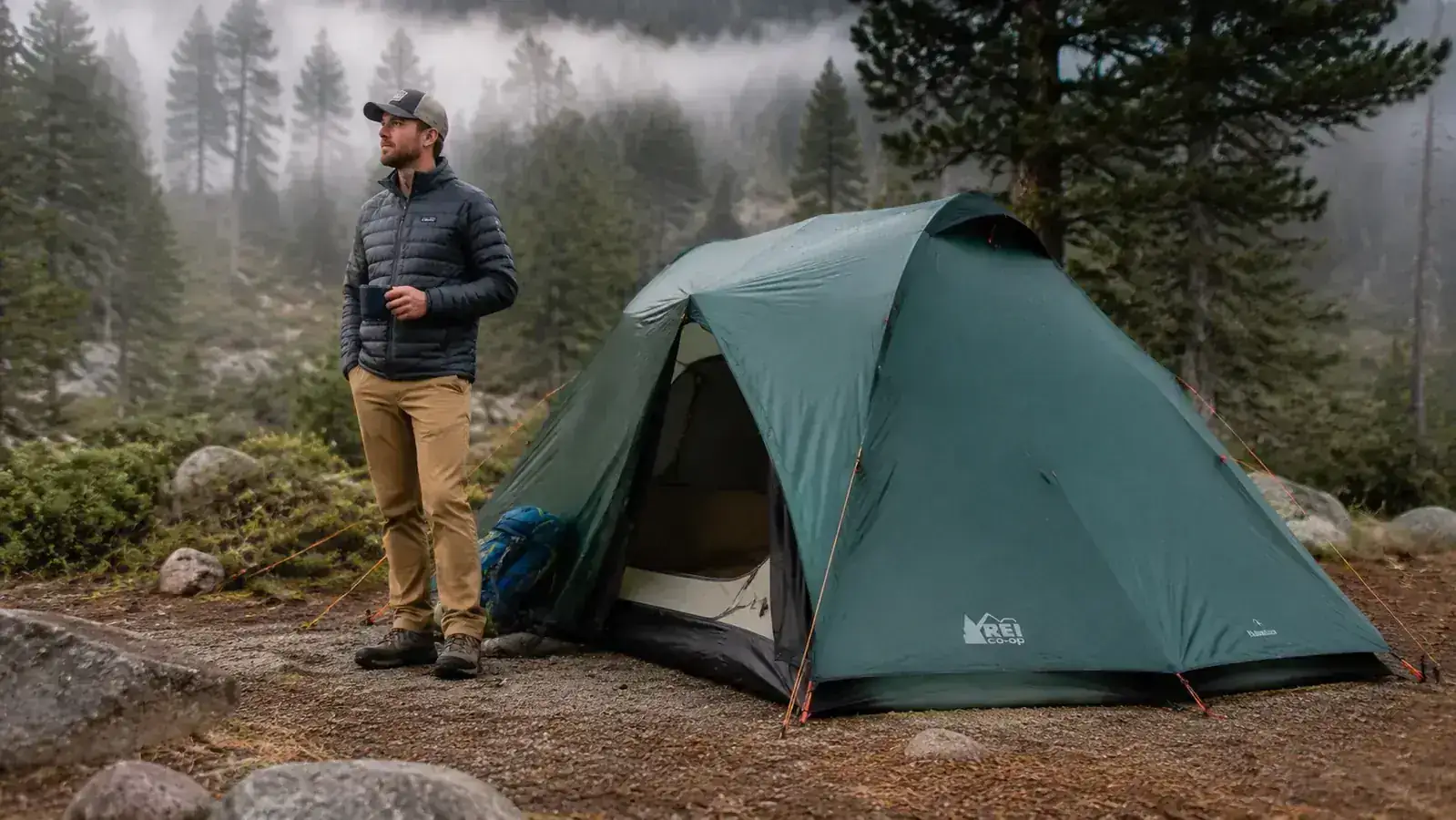
I have 4,590 neighbors on Amazon who gave the Coleman Montana four or five stars. I've read a few hundred of those reviews. And I'll tell you right now: almost none of them answer the questions that matter before you buy this tent. Nobody mentions how heavy it is to carry solo from the parking lot. Nobody describes what happens to the floor seams after two wet seasons. Nobody tells you about the specific corner stake configuration that matters when wind hits the broad side of a cabin tent. I've pitched the Montana over a dozen times in three years, in conditions ranging from a dead-calm July evening to a late-August hailstorm at a campsite near Silverthorne, Colorado. This is the review I wish I'd had.
The Coleman Montana 8-person tent is one of the best-selling large family tents on Amazon, and the rating is mostly deserved. But 'mostly' is doing a lot of work in that sentence. What follows is not a takedown. It's a full accounting, including the parts that don't make the product description.
The Quick Verdict
A genuinely roomy car-camping tent at a fair price, let down by mediocre waterproofing straight out of the box and a carry weight that's miserable to move solo.
Amazon Check Today's Price →If you've read enough and just want to see today's price on the Montana, here it is.
Coleman has been making this tent long enough that they've worked out most of the structural issues. Just plan to seam-seal it before your first trip in the rain.
Amazon Check Today's Price on Amazon →What the Listing Won't Tell You About Setup
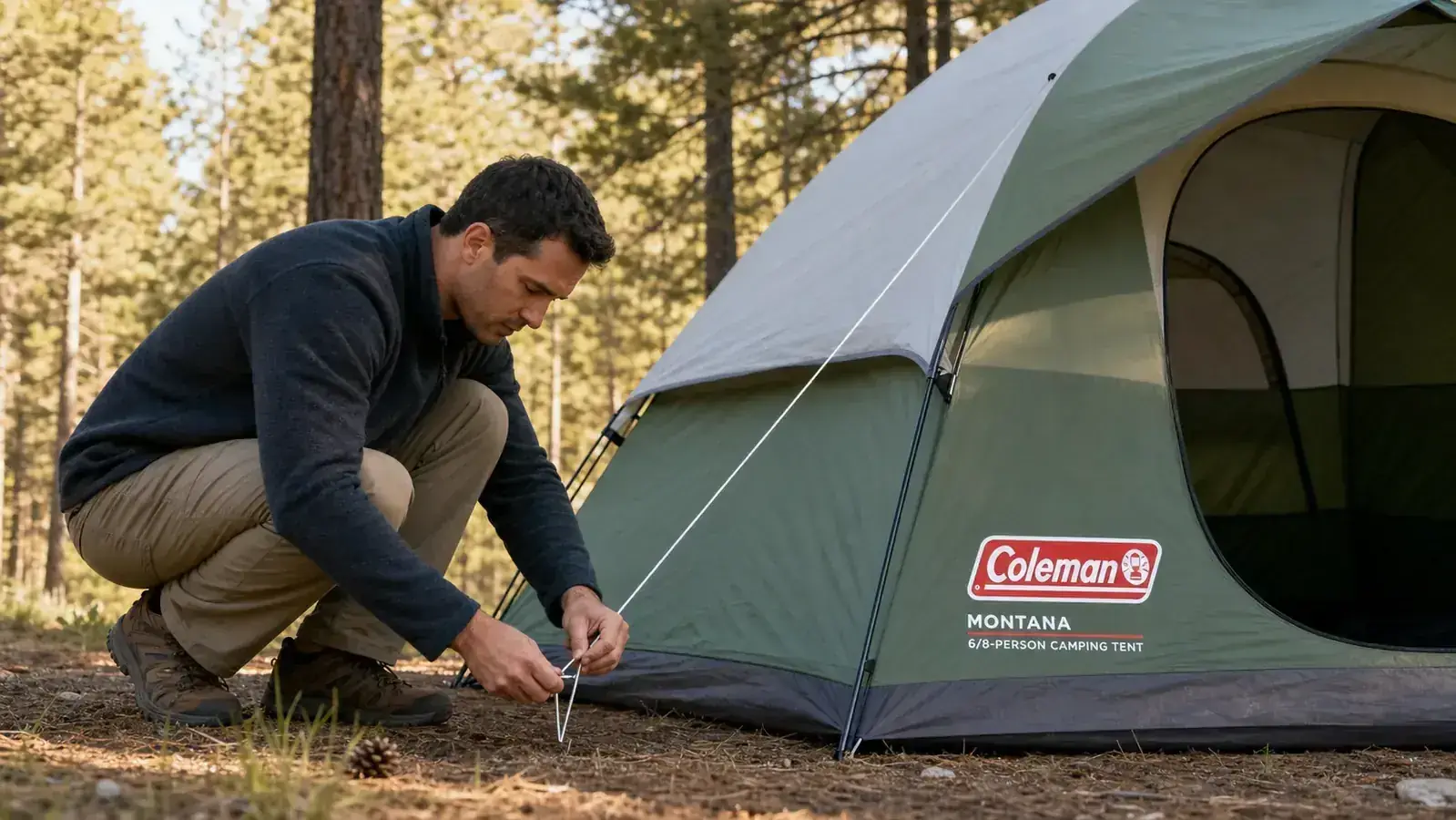
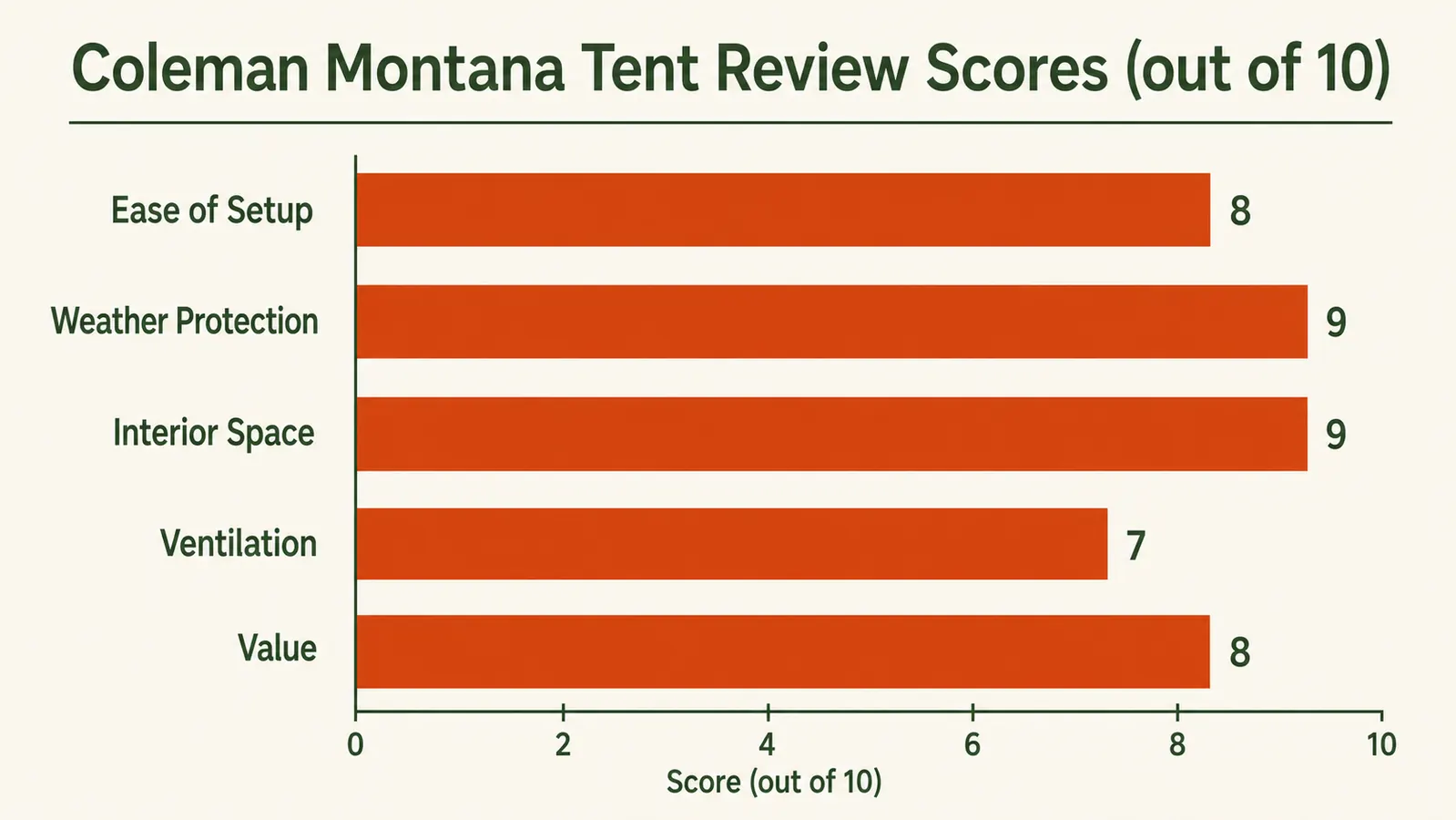
The Montana is marketed as an easy setup. Coleman says two people can pitch it in about 15 minutes. That's true, barely, on a flat surface with good stakes. What the listing doesn't say is that this is a pole-and-pin system, not a freestanding tent in the conventional sense. The fiberglass poles slot into corner pins and run over the top in an X pattern. If you've never done it before, that first setup takes closer to 30 minutes because the pole tension isn't intuitive. The second time it's fine.
Where it gets harder: the Montana is 14 feet by 10 feet. That's 140 square feet of footprint you need to stake out on flat ground before the poles go in. On a pre-cleared campsite, no problem. On a sloped or rocky site, you'll spend real time adjusting. I've done it on a site at Mueller State Park where I had to use a mallet and repositioned three stakes twice before the floor sat flat enough to keep water out during a morning drizzle. Plan the site selection before you grab the poles.
One more thing on setup: this tent weighs 17.5 pounds. That's the listed carry weight. In practice, the bag with all poles and stakes is closer to 20 pounds because the packed bag gets damp and absorbs a little weight over time. If you're camping solo or have a bad back, carrying it from the trunk to the site in one trip is a real lift. It's not a trip-killer, but it's worth knowing.
The Waterproofing Issue Nobody Wants to Say Out Loud
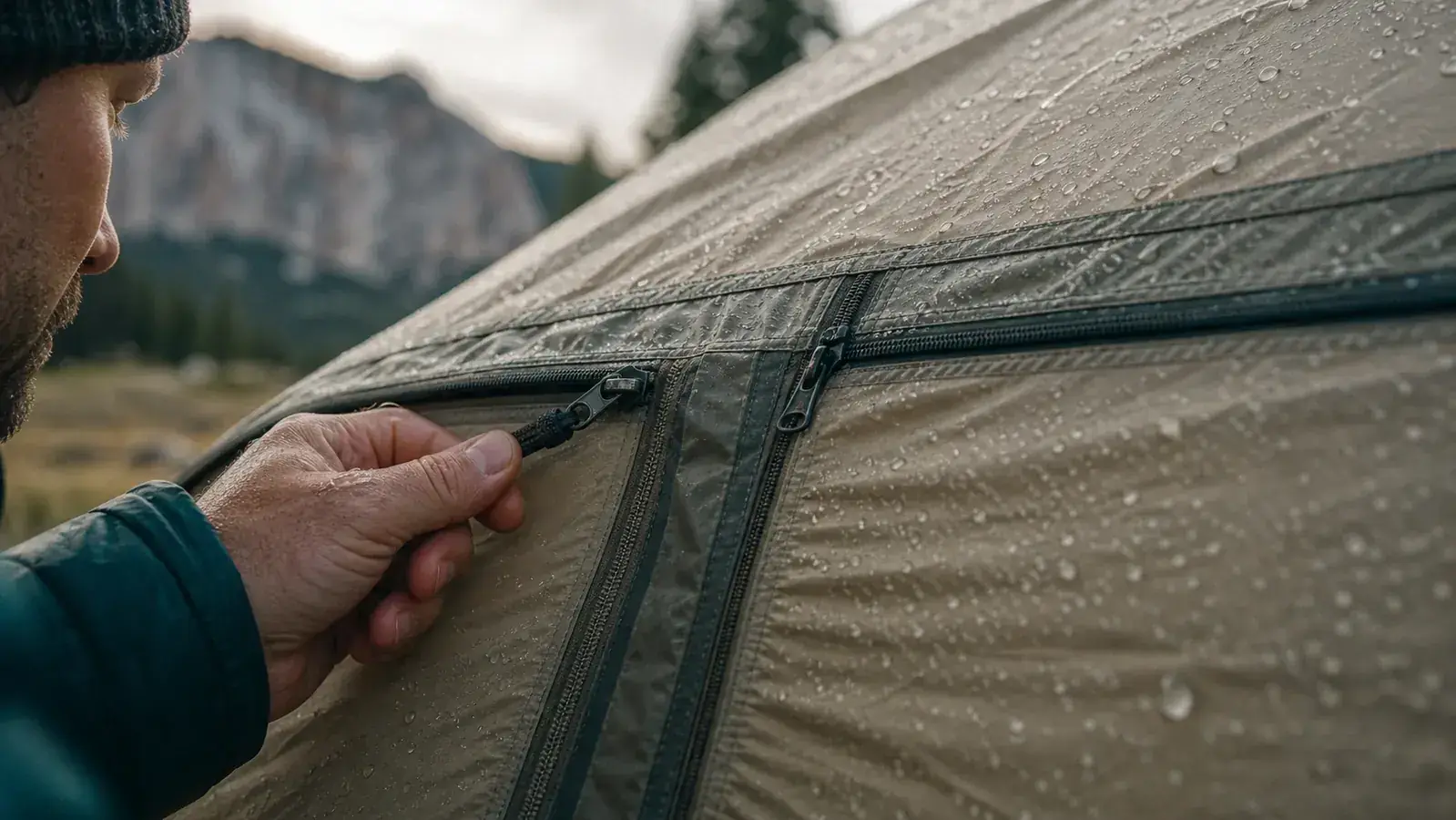
Here is the number that matters: 1,000mm hydrostatic head rating. That's Coleman's listed waterproofing spec for the Montana's floor and fly. A rating of 1,000mm means the fabric can withstand a column of water 1,000 millimeters tall before it starts to leak. For context, a genuine downpour produces rain at 25 to 50mm per hour. On paper, 1,000mm sounds more than sufficient. In reality, that rating applies to the fabric itself, not the seams.
The Montana ships from the factory with seams that are not sealed. This is printed in small type in the manual. Coleman recommends seam-sealing before first use. I did not do this before my first wet trip. That was a mistake. During a two-hour thunderstorm at Staunton State Park, I got seepage along two floor seams near the front door. It wasn't a flood, maybe a tablespoon of water, but it was enough to wet the bottom corner of a sleeping bag. Now I seam-seal every new tent before it sees rain. Takes about 45 minutes with a tube of seam sealer and costs very little. Problem solved, but you should know it's a step that's required, not optional.
The Montana ships without sealed seams. Coleman mentions it in the manual, in small type. Seam-seal before your first rainy trip. It's a 45-minute fix. Skip it and you'll learn the hard way.
Wind Performance: The Cabin Shape Trade-Off
A cabin tent has near-vertical walls. That's the whole reason you buy one: standing room, more usable floor space, and a living-room feel inside. The trade-off is aerodynamics. Vertical walls catch wind the way a billboard does. The Montana's broad side profile is about 14 feet wide and six feet tall, roughly 84 square feet of surface area for wind to push on. In light-to-moderate wind, the tent flexes but holds. The fiberglass poles are reasonably stiff and the stake points are well-positioned.
In sustained wind above 25 mph, though, you'll feel it. The center ceiling drops a few inches and you hear the poles creaking. I had this happen during a August trip near Frisco when a thunderstorm came in faster than forecast. The tent stayed up, no collapses, no failed stakes. But it was loud and the ceiling flex was enough that anything hanging from the interior gear loft swung around. If you camp in exposed sites or areas prone to afternoon storms, point the tent door into the prevailing wind. That small orientation choice makes a measurable difference in how much the structure flexes.
Interior Space: Where the Montana Actually Delivers
This is where the review gets genuinely positive. The interior headroom at the center peak is six feet two inches. I'm five-eleven and I can stand straight with a few inches to spare. The cabin walls stay nearly vertical out to about two feet from the edge, so even the sleeping area near the walls has usable headroom. With four sleeping pads and four sleeping bags, there's still room to move around without stepping on each other.
Coleman includes a hanging divider that clips across the center of the tent to create two separate rooms. With two kids, this is the feature that actually matters most to most families. The divider isn't soundproof, obviously, but it creates a visual separation and a clear boundary for whose gear stays on whose side. My kids, ages 9 and 12, treated it like they each had their own space. That alone makes a long weekend significantly less chaotic. The gear loft above the divider is a nice touch too, though I wouldn't hang anything heavier than a lantern from it.
Ventilation is handled by two large windows with no-see-um mesh and roll-down covers, plus the door mesh. On a warm night without rain, running the mesh open keeps the interior comfortable down to about 70 degrees without feeling stuffy. In cold weather you're closing everything up and the space heats from body warmth reasonably fast.
Floor Durability After Three Seasons
The floor material is 150D polyester with a 1,000mm coating. After three seasons of real use, here's the current state: the floor still looks structurally intact, no holes, no visible delamination. But the coating in the highest-traffic zones near the doors has thinned. I can tell because water now beads less aggressively than it did the first year. This is expected wear on any coated polyester floor and it's why a footprint or ground cloth under a tent is not optional equipment. I use a canvas tarp cut to fit. It adds maybe three pounds to the pack weight and it's probably doubled the floor's functional life.
The zipper quality is the other long-term watch item. The main door zipper is large-gauge and has held up without a single snag in three years. The window zippers are lighter and one of them required lubrication after the second season when it started catching on the mesh. A single application of zipper wax fixed it. Minor maintenance, but worth knowing before your first trip so you bring the fix with you rather than discovering it at 10pm.
What I Liked
- Standing room throughout: 6'2" center height with near-vertical walls to within 2 feet of the edges
- Room divider actually creates usable separate sleeping zones for families
- Large-gauge main door zipper has held up through 30+ setups without a snag
- Rainfly covers nearly the full tent and creates a covered entry vestibule
- Price-to-size ratio is strong compared to cabin tents from competing brands at the same spec level
- Gear loft, interior pockets, and E-port for running a power cord into the tent are all genuinely useful
Where It Falls Short
- Ships without sealed seams, seam-sealing is a required pre-trip step most buyers skip
- Carry weight of 17-20 lbs is hard to move solo from parking lot to site
- Broad cabin profile catches wind; exposed sites require careful orientation
- Floor coating shows wear after two seasons in high-traffic door zones; a footprint is essential
- Fiberglass poles lack the stiffness of aluminum; flex is noticeable in wind above 25 mph
- Setup takes 25-30 minutes the first time, not the 15 minutes the listing implies
How It Compares to What You Might Be Considering Instead
The two tents I see people cross-shopping with the Montana most often are the CORE 9-Person Instant Cabin Tent and the Ozark Trail 8-Person Cabin Tent. If quick setup is your top priority, the CORE Instant is meaningfully faster to pitch because the poles pre-attach to the tent body. You're looking at under five minutes versus the Montana's 25. The CORE costs more, though, and the instant-pitch mechanism creates attachment points that can wear out over time. You can read a direct comparison in the Coleman Montana vs CORE Instant Tent piece if you're deciding between those two.
The Ozark Trail 8-person is cheaper and has a similar footprint, but the materials are noticeably lower grade. The zippers are lighter, the floor coating is thinner, and the pole stiffness is less. For occasional fair-weather camping, it's serviceable. For three seasons of real use including multiple rain events, the Montana holds up materially better. You're paying for that durability gap.
Who This Is For
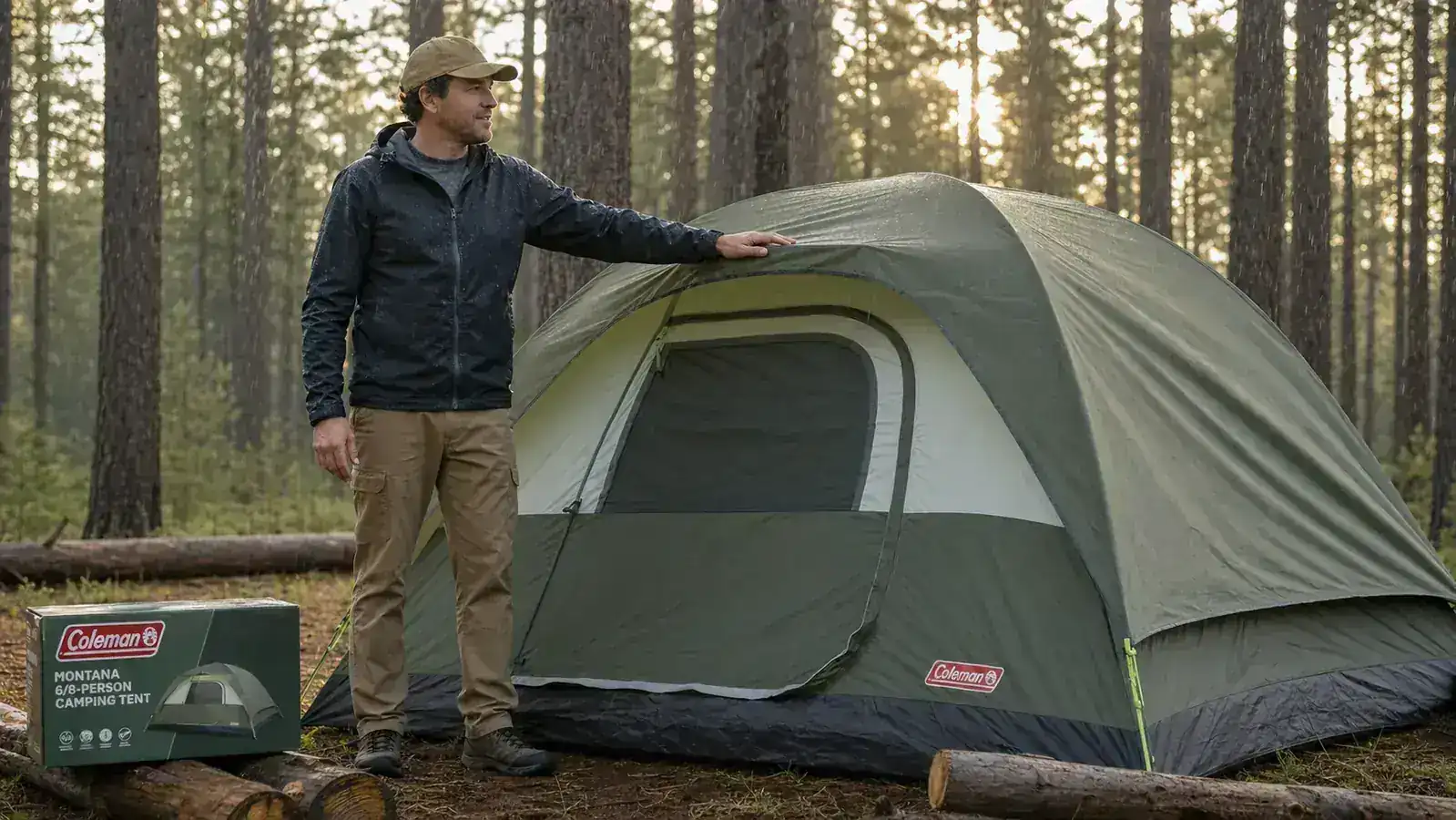
The Coleman Montana is the right tent for a family of four to six who camps at developed campgrounds with vehicle access, prioritizes interior livability over packability, and wants a tent that earns its keep over multiple seasons. If you have kids and want separate sleeping zones, the divider alone justifies the purchase. If you're car camping at sites with a flat tent pad, easy stake-in conditions, and a second adult to help with setup, this tent will cover you well. Seam-seal it before the first rain and use a footprint and it'll last five seasons without drama.
Who Should Skip It
If you're camping solo or with just one other adult who has back issues, the carry weight is a genuine problem. If you frequently camp in exposed sites with sustained wind, a lower-profile dome tent will feel more secure even if it means giving up headroom. If you want to set up in under 10 minutes without reading the instructions, look at an instant-pitch tent instead. And if you tend to skip maintenance steps and want a tent that's completely bulletproof out of the box without seam sealing, this isn't it. Not because it's a bad tent, but because that expectation doesn't match the product's reality. For setup tips that make the process faster and work even if you're doing it without a second person, see the guide on how to set up a large family tent fast.
Three years in, I'd buy it again. Just seal the seams first.
The Montana has earned its place in my truck bed for every summer camping trip. It's not perfect, but it's honest gear at a fair price, and Coleman's warranty backs it up. Check the current price below before deciding.
Amazon Check Today's Price on Amazon →