

Every spring I do the same pre-trip scramble. I check the gear bag, find my old battery-powered lantern, and realize the AAs inside have leaked and corroded the contacts. Then I'm at a gas station two hours before I leave, buying an overpriced 8-pack of batteries that'll be dead by night two. I did that routine for years before switching to the Favourlite rechargeable lantern, and I want to save you the grief.
The Favourlite puts out 3000 lumens, runs on a built-in 4400mAh battery, charges via USB-C, and has five light modes including red night-vision. It weighs under a pound. If you're still buying disposable batteries for camp lighting, here are 10 concrete reasons to stop.
Stop buying batteries. The Favourlite charges in your car on the way to the trailhead.
The Favourlite 3000-lumen lantern has 1,500+ Amazon reviews, a 4400mAh phone charger built in, and costs less than two packs of D batteries.
Amazon Check Today's Price on Amazon →No Batteries to Buy, Forget, or Find Dead at Camp
This is the obvious one, but it still costs people trips every year. Battery-powered lanterns depend on you having the right size cells (D, C, or AA depending on the model), in the right quantity, fully charged. Forget one variable and your lantern is a paperweight. A rechargeable lantern like the Favourlite uses its own internal lithium cell. Charge it at home the night before. Done. There's no battery math to do at 10pm in the dark.
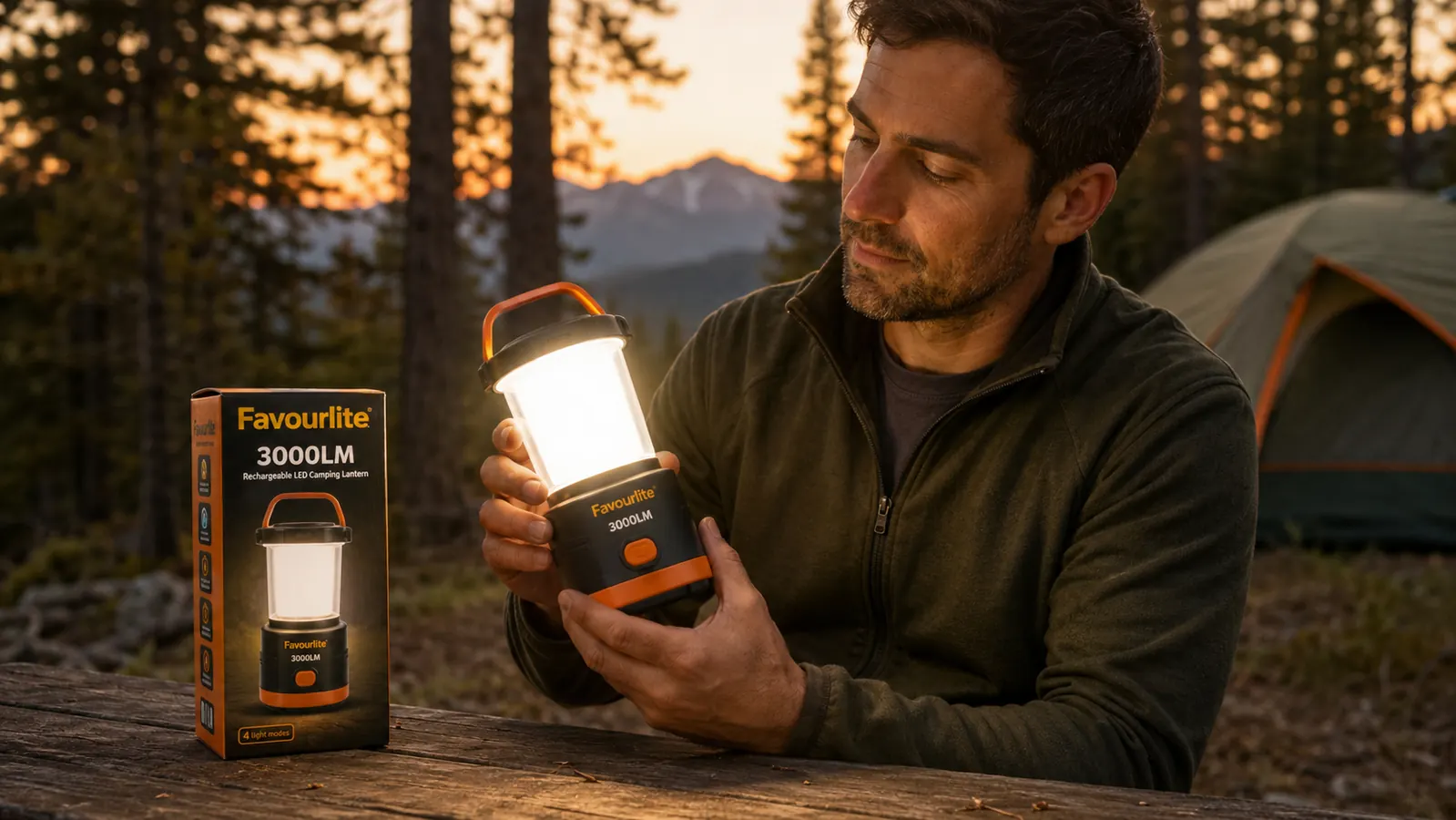
You Can Charge It In the Car on the Drive Out
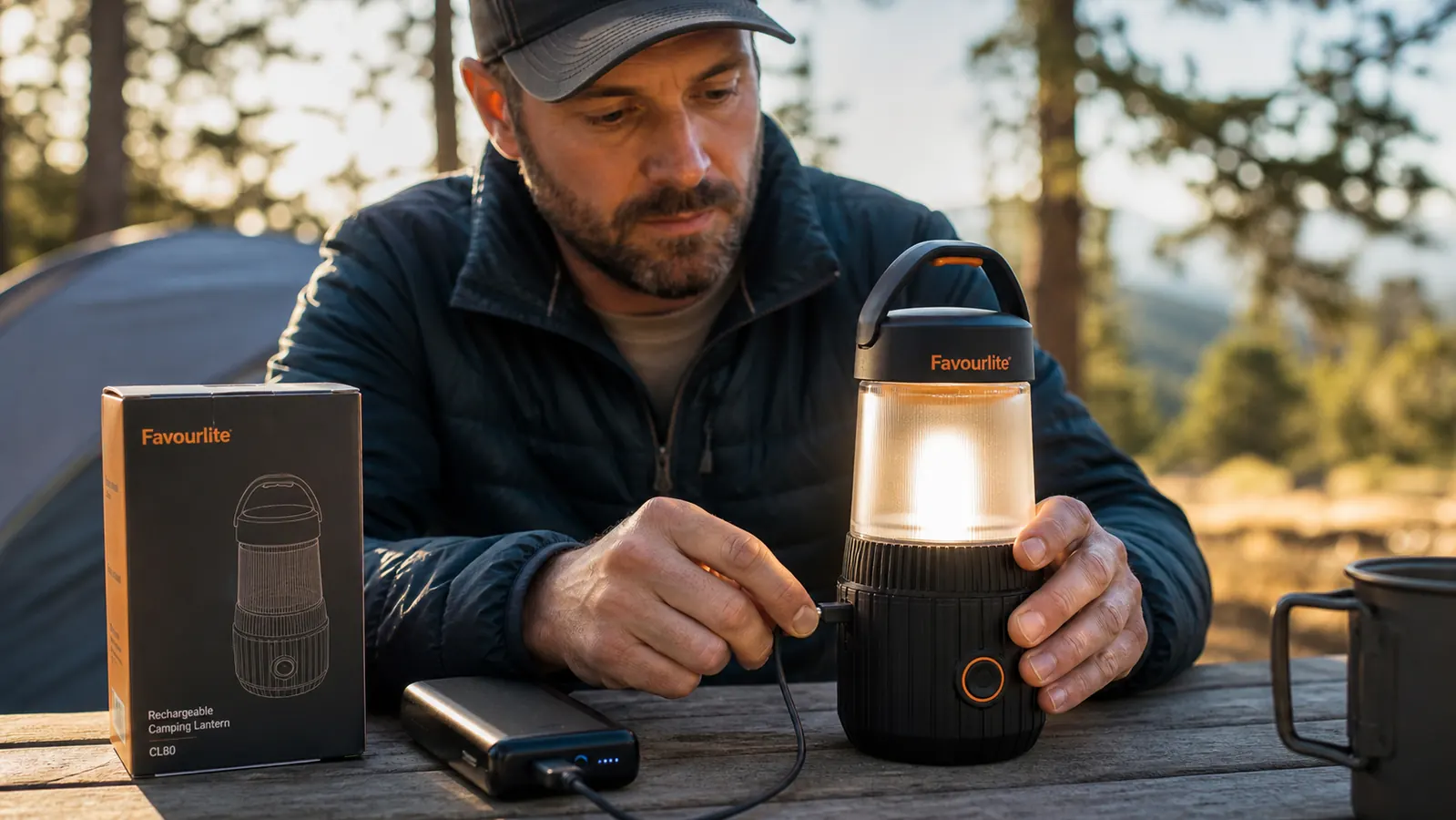
This one took me too long to appreciate. The Favourlite uses USB-C. That means on the two-hour drive to Rocky Mountain State Forest, I can plug it into my car's USB port and it arrives fully charged. With a battery lantern, there's no equivalent. You either remembered to buy fresh batteries ahead of time or you didn't. The USB-C charging window gives you a built-in recovery option if you space out during packing.
The Brightness Is Consistent From Full to Nearly Empty
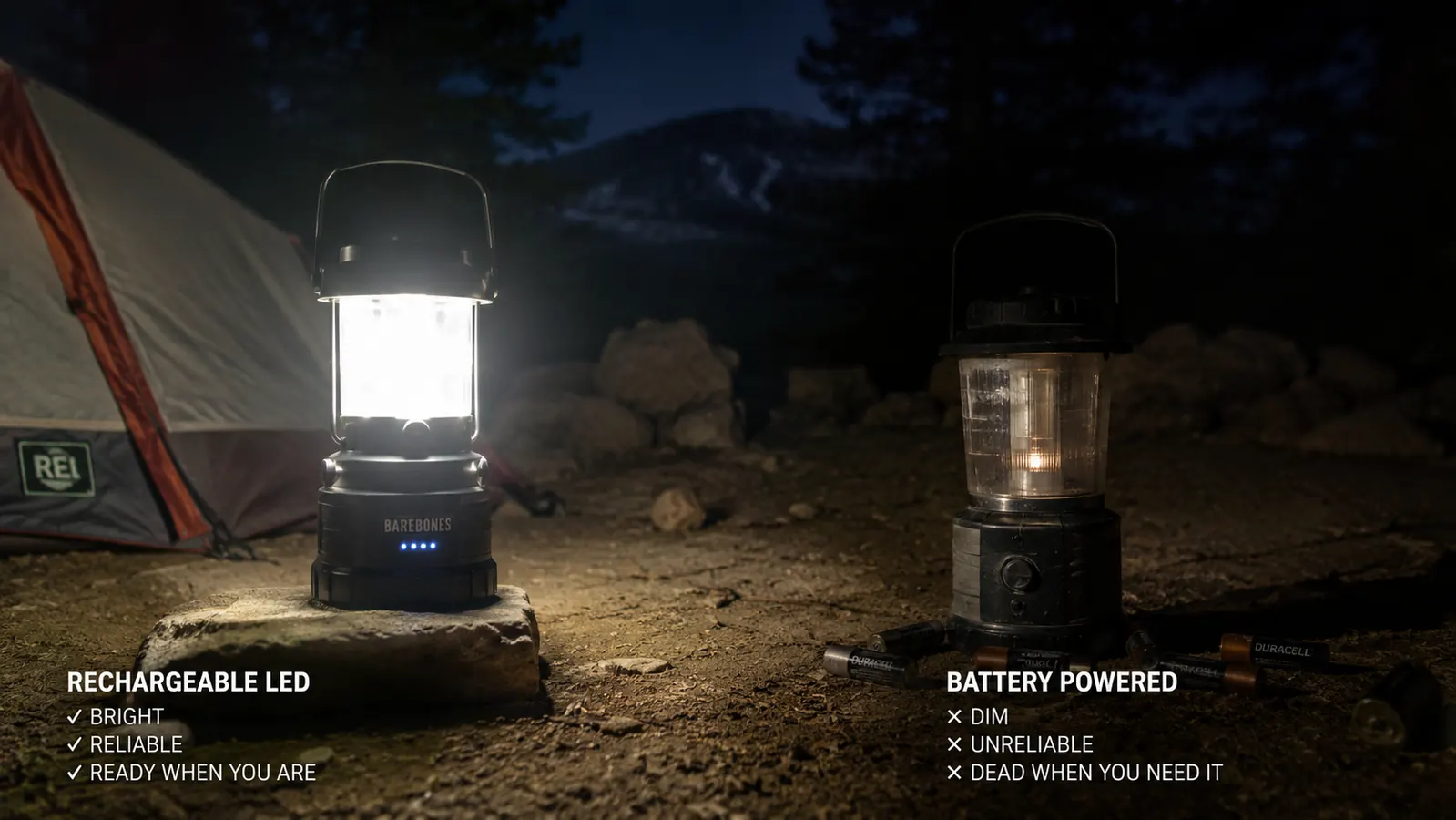
Alkaline batteries sag. The first night your battery lantern is bright. By night three it's noticeably dimmer, and you're doing camp chores by the light of a candle. Lithium-ion cells in rechargeable lanterns hold output much more consistently across the discharge cycle. The Favourlite stays at its rated brightness until the cell is nearly depleted, then gives you a low-battery warning. That matters when you're cooking dinner or reading a map.
It Can Charge Your Phone When You Need It
The Favourlite has a USB-A output port. The 4400mAh internal battery gives you roughly 1.5 full charges of a modern smartphone, which covers a weekend trip where you're mostly offline. That means one device does double duty: it lights your campsite and keeps your phone alive for photos, navigation, or an emergency call. No battery-powered lantern I've used has ever done that.
You Stop Buying Batteries You'll Throw Away
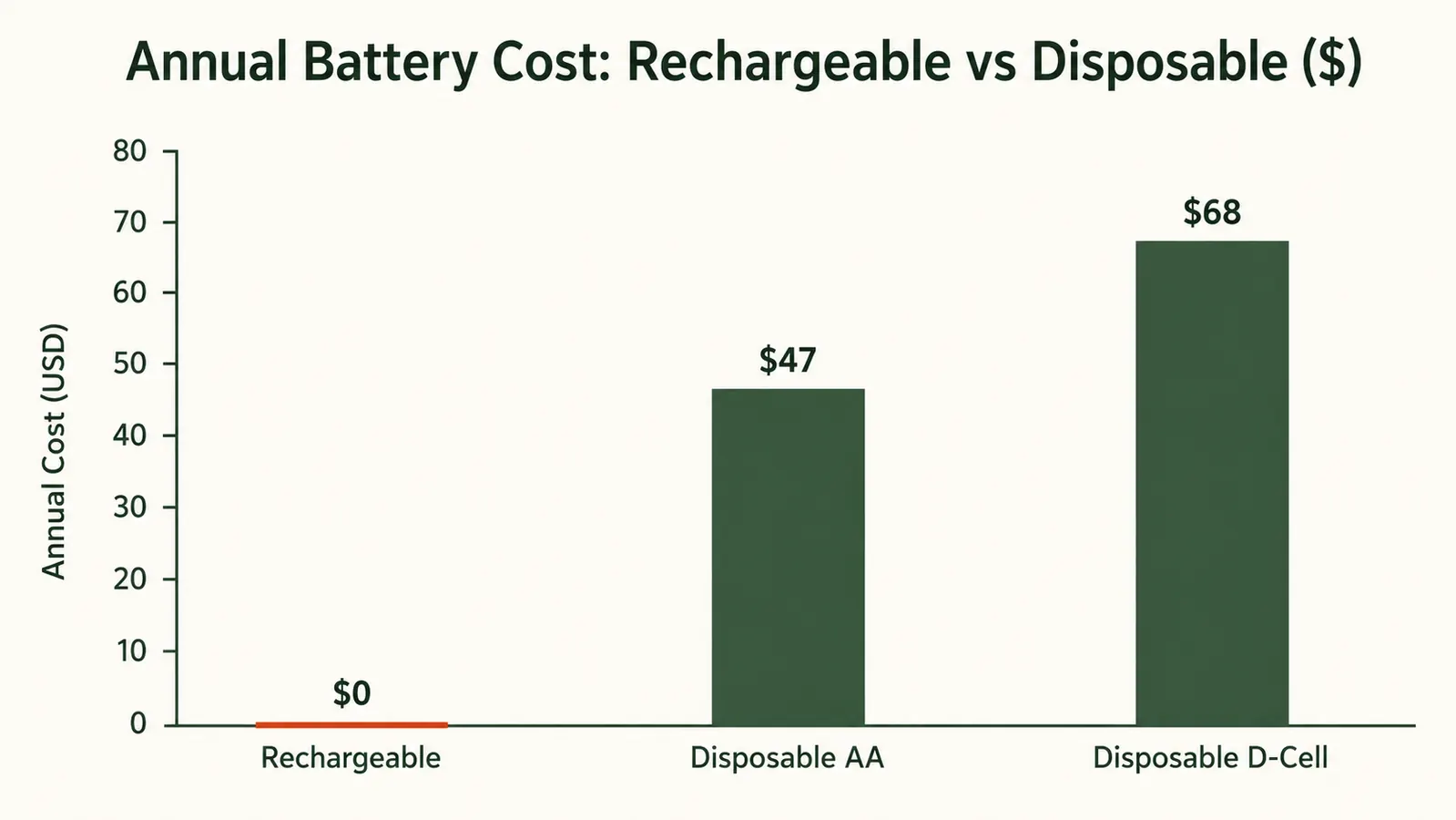
Four D cells per charge cycle at several dollars a pack. Three camping weekends a summer. Over five years that's a significant amount just in lantern batteries, most of which go in the trash because disposable alkalines are not widely recycled. The Favourlite's internal battery is rated for several hundred charge cycles. Even if it dies in three years, you're still ahead on cost and you've generated a fraction of the waste.
I used to pack six extra D batteries 'just in case.' Now I pack a USB-C cable I already carry for my phone. That's the whole difference.
The Red Night-Vision Mode Is Legitimately Useful
Battery lanterns almost never have a red mode. The Favourlite does, and once you use it you'll wonder why you didn't have it sooner. Red light does not kill your night vision the way white light does. That means you can use it inside the tent when your partner is sleeping, navigate to the bathroom at 2am without waking up the whole site, or read a map without advertising your position to every deer and nervous raccoon in the area. A small feature that earns its keep every single trip.
You Can Top It Off at a Day-Use Area or Trailhead Kiosk
More and more national forest trailheads and state park day-use areas have USB outlets in the bathroom building or the ranger station. On longer trips, a quick 45-minute plug-in while you're eating lunch can add meaningful runtime to your lantern. That option doesn't exist with a battery lantern unless you happen to find a gas station that stocks the right size. Rechargeable gear fits the way modern campsites actually work.
No Contact Corrosion When the Lantern Sits for Six Months
Battery lanterns left in a gear bag between seasons are a reliability gamble. Alkaline batteries leak, and the potassium hydroxide they release corrodes the contacts. I've trashed two battery-powered lanterns this way, both of which were otherwise fine. The Favourlite's internal battery doesn't leak. It self-discharges slowly over time, but there's no chemical corrosion risk. Pull it out in May after eight months in storage, charge it for two hours, and it works exactly as it did in September.
3000 Lumens Covers a Campsite, Not Just a Table
Most battery lanterns in the same price bracket top out at 300 to 600 lumens. The Favourlite maxes at 3000, which is enough to light an entire site perimeter, not just the picnic table in front of you. That said, running it wide open burns battery fast, so Marcus's approach is simple: use the medium mode (around 800 lumens) for camp tasks, switch to high only when you need to see across the site. Five modes gives you actual control over runtime versus brightness. Battery lanterns with a single switch don't.
It Consolidates Gear You'd Otherwise Pack Separately
Think about what you currently pack for a weekend camping trip in the lighting department: a lantern with spare batteries, a headlamp with its own batteries, maybe a small power bank for your phone. The Favourlite collapses two of those into one. It's your primary camp light and your emergency phone charger. I still bring a headlamp for moving around, but the power bank stayed home after the first trip. Fewer items in the bag, fewer batteries to track, and one less thing to lose under the truck seat.
What I'd Skip
Rechargeable lanterns are not automatically good just because they're rechargeable. The Favourlite earns its place, but there are a few things to know going in. The 3000-lumen rating on max mode will drain the battery in about two to three hours. If you're camping somewhere with no USB access for multiple days, you need a solar panel or a car charger backup plan. The build is plastic and feels like it, which is fine for car camping but not something I'd toss in a pack for a hard trail day. And the 4400mAh phone-charging capacity is enough for one full charge of a modern phone, not two. Set the right expectations and it won't disappoint.
If you're doing serious backcountry trips where ounces matter and you're out for more than three days without power, a different tool is the right call. But for the car-camping and one or two night trips that make up most people's camping, the Favourlite is the practical pick. For more on building out a full no-fire campsite lighting setup, see my guide to lighting your campsite without a fire. And if you want a full long-term breakdown of this specific lantern, the Favourlite review covers three months of use across Colorado camping trips.
Ready to stop buying batteries? Here's where to grab the Favourlite.
The Favourlite 3000LM rechargeable lantern is one of the most-reviewed camp lanterns in its price range for a reason. USB-C charging, built-in phone charger, five light modes including red. Check what it's going for today before you buy another pack of AAs.
Amazon Check Today's Price on Amazon →